
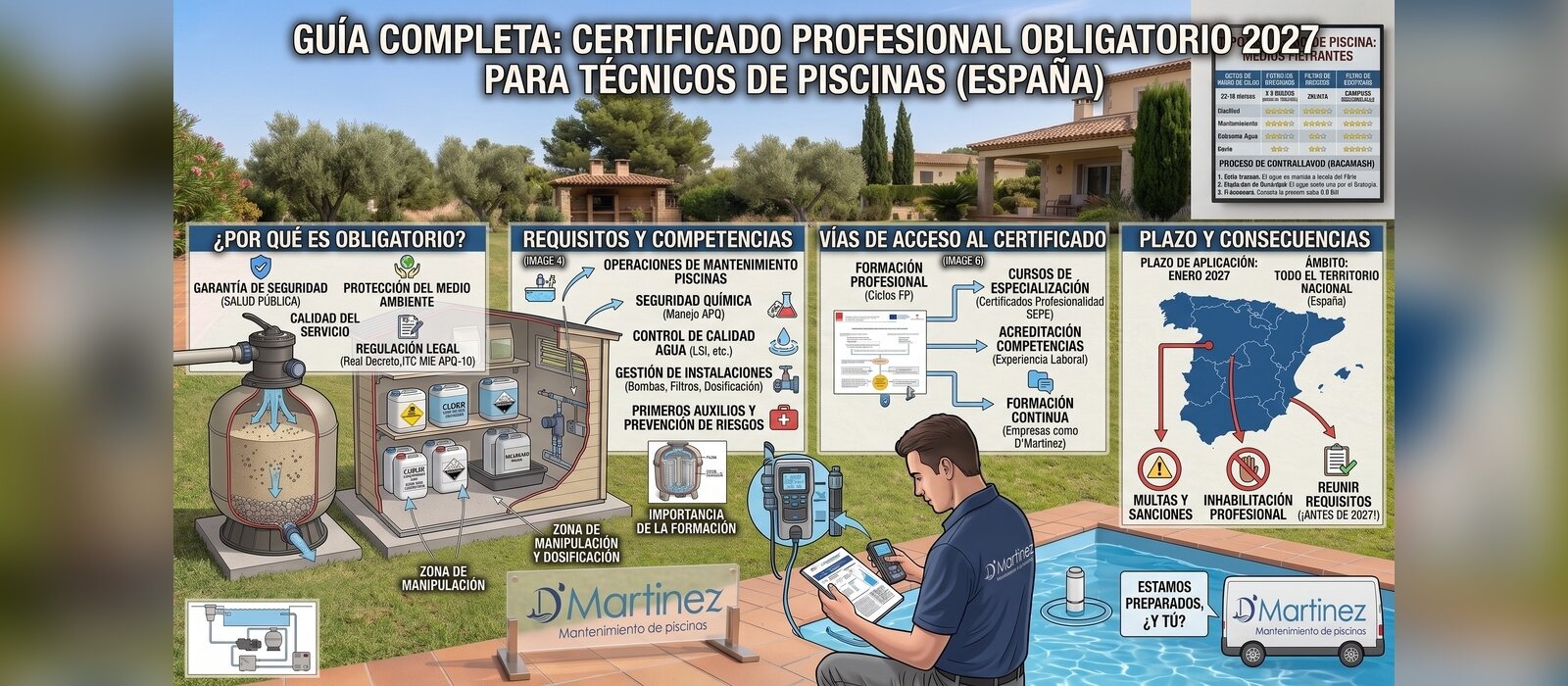
This isn't a rumour or a proposal in progress: it's a real regulatory obligation, already approved, with a set deadline. Here we explain where it comes from, exactly who it affects, and what it means for your residents' community or hotel.
The road to the certificate
Where this obligation comes from
The requirement stems from the third additional provision of Real Decreto 742/2013, which sets out the technical-health criteria for pools in Spain, as amended by Real Decreto 3/2023 (on drinking water quality). That change introduced, for the first time, the obligation for staff carrying out the water "treatment programme", chemical control, cleaning and maintenance of equipment and facilities, to hold an official professional qualification.
The royal decree itself sets the deadline as 2 January 2026. The 2027 date comes from the Public Health Commission agreement of 10 October 2025, which extended that deadline by one year on an exceptional, transitional basis. The decree's text hasn't changed: the obligation stands and only its enforcement has been postponed.
The original deadline was 2 January 2026. The Comisión de Salud Pública agreed on 10 October 2025 to extend the deadline by one year, to 2 January 2027, due to insufficient training availability for the whole sector within the original timeframe.
Which certification is required
Specifically, the SEA757_2 Professional Certificate (Safety and Environment professional family, level 2), which can be obtained through several routes:
- Training at centres accredited by the SEPE or the relevant regional government.
- Publicly funded employment training programmes.
- Accreditation of prior work experience already demonstrated in the sector (the procedure known as "Acredita").
Which pools does it affect?
Pools for public or collective use: residents' communities, hotels, campsites, sports complexes and similar. If you have a private pool at a single-family home, this specific staff certification requirement doesn't apply to you directly, although, as always, it's still a good idea for whoever maintains it to know what they're doing.
What to do if you're a property manager or board member
With plenty of time before the deadline, the simplest thing is to ask your maintenance company for written confirmation that their staff already hold (or will hold in time) the SEA757_2 Professional Certificate. If you haven't done so yet, it's a good time to ask, better to sort it out with margin than in the final weeks of 2026, when demand for training is likely to spike. In our case, we've held this certification since the first application rounds opened.
Frequently asked questions
Which pools does this regulation affect?
Pools for public or collective use: residents' communities, hotels, campsites and similar. Private pools at a single-family home are not subject to this requirement.
What happens if my community doesn't have certified staff on 2 January 2027?
Responsibility falls on the community as the owner of the facility, not only on the company providing the service. It's worth confirming this with your provider in good time.
Is this the same regulation that requires a qualified lifeguard?
These are related but separate requirements. This certification (SEA757_2) is specific to whoever treats the water and maintains the facility, whether or not that's the same person acting as lifeguard.
This information reflects the state of the regulation according to the sector sources available at the time this article was published. If you have any doubts about a specific case, we recommend confirming it with your property manager or with official sources (Ministerio de Sanidad, the relevant regional government).