
Resources
Blog: pool maintenance guides
Everything we've learned over years of pool maintenance, explained without unnecessary jargon. Written by our own technical team, not copied from anywhere.
Subscribe via RSSEverything we've learned over years of pool maintenance, explained without unnecessary jargon. Written by our own technical team, not copied from anywhere.
Subscribe via RSSThe D'Martinez Academy brings these same guides together in 4 progressive levels, 40 lessons in total. Your water in good hands.

Which Madrid communities must keep one under Decreto 99/2024, when to test, what goes in each column, and a PDF template ready to print.
Tap water hardness, pH and chlorine in 13 towns south of Madrid, from official analyses, and how much calcium to add when filling.
Open the tool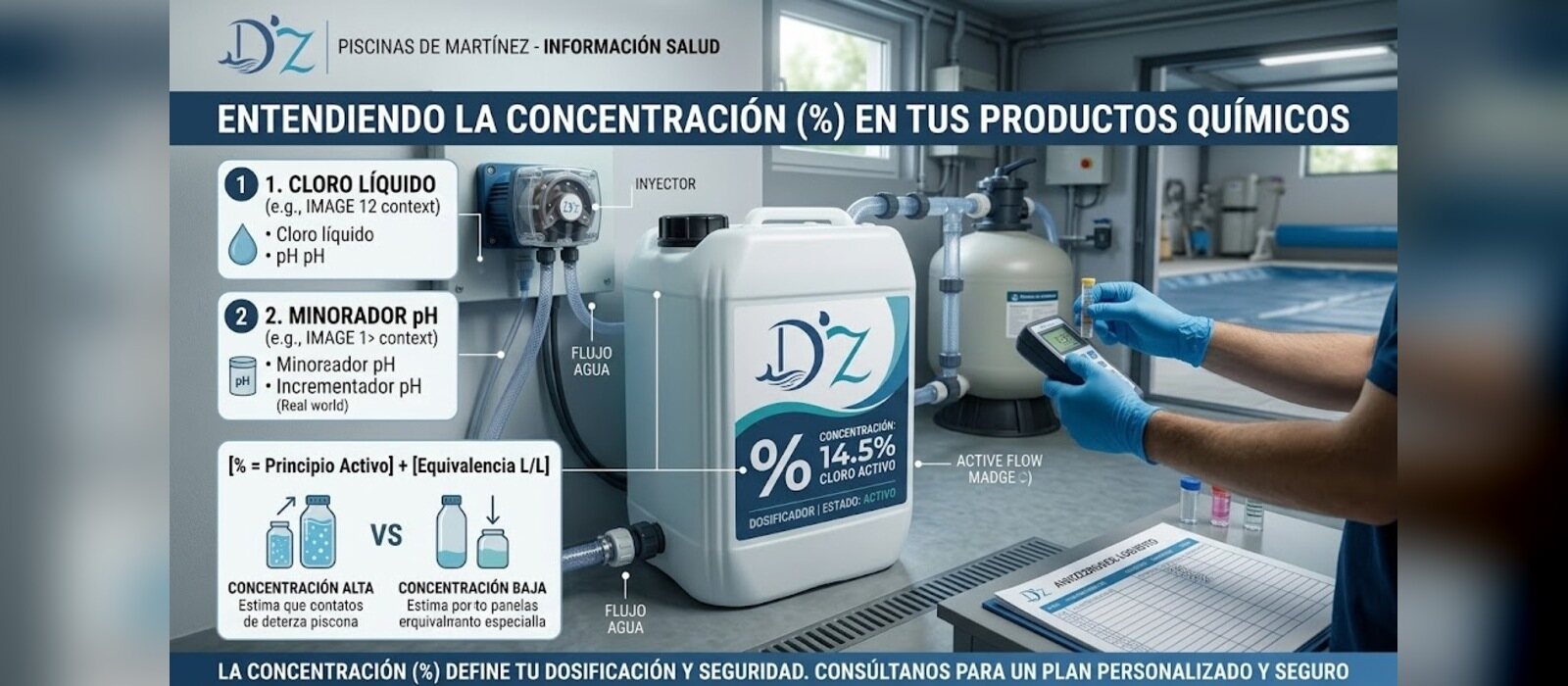
Authorisation number, active substance, pictograms and H statements: what the tub really says and how to check in two minutes that the product is authorised.
Read guide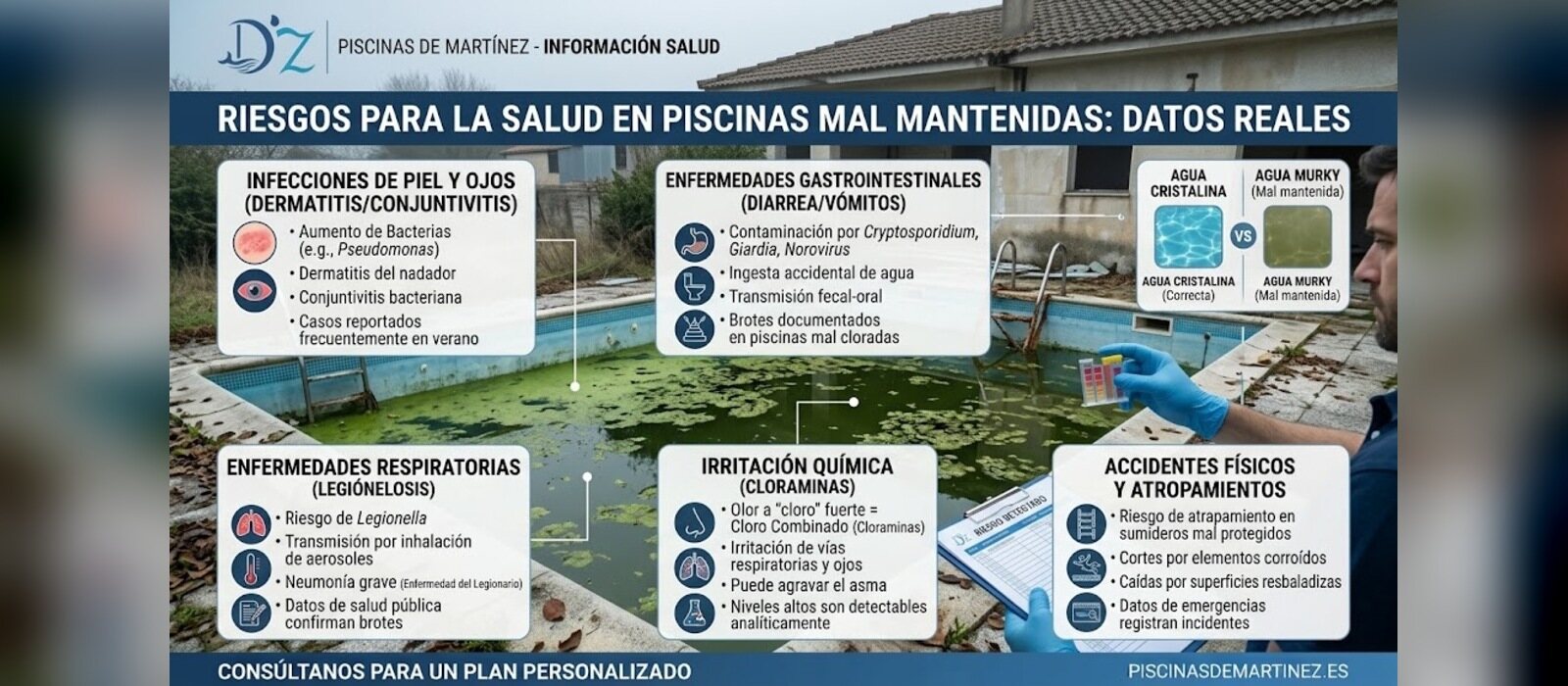
Warm bubbling water is ideal for Legionella and Pseudomonas. Legal limits, maximum temperature and the cleaning the rules require.
Read guide
Why a pump that runs slower uses far less power: the cube law with simple numbers and which pools the switch makes sense for.
Read guide
The 9 rules in Decreto 99/2024, what else to display and a PDF sign.
Read guide
What should be in writing so you can compare quotes without surprises.
Read guide
Trichlor, dichlor, calcium hypochlorite or liquid: which suits you and why.
Read guide
Hair in the filter, more chlorine used and how to compensate.
Read guide
Why LED pays off, what the electrical rules require and how to change it.
Read guide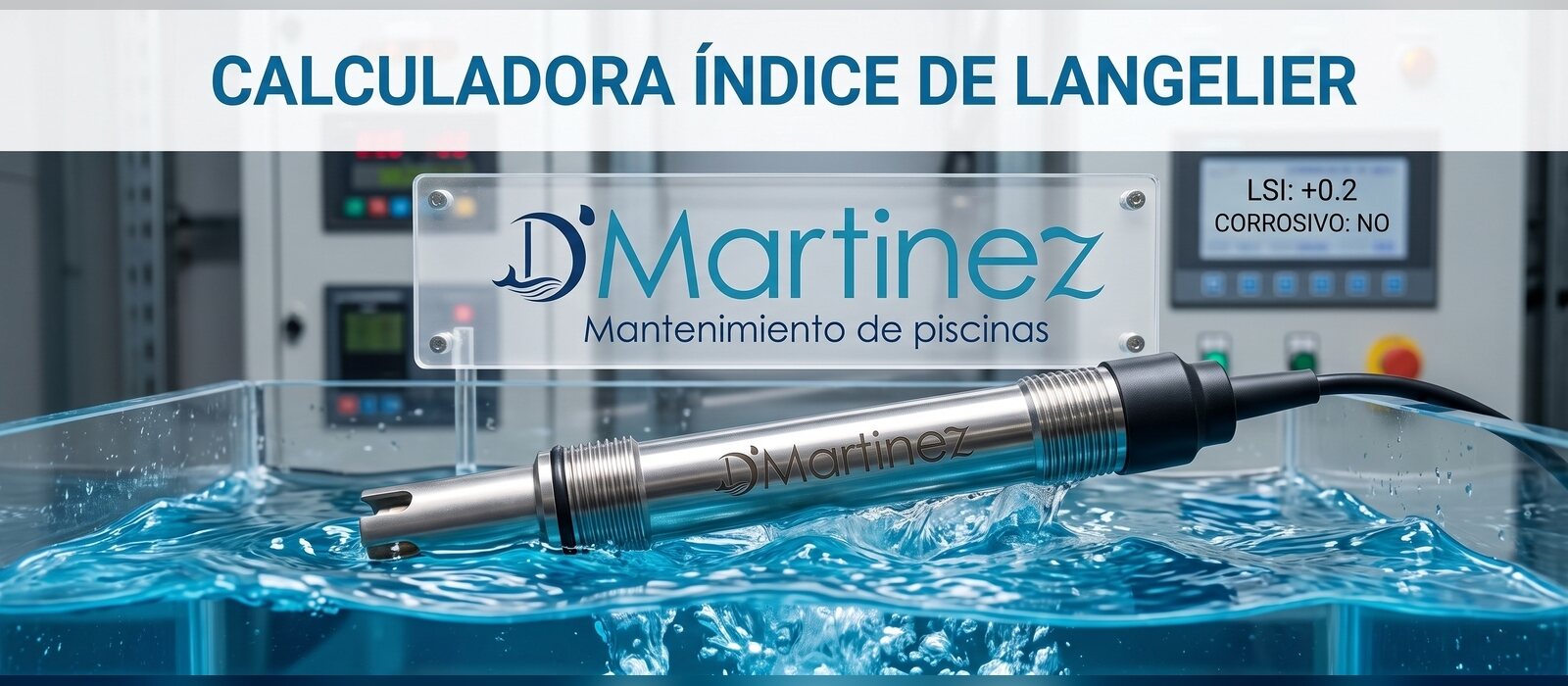
Find out with a single number whether the water is corrosive, balanced or scale-forming.
Open the calculator
Who needs one, how many by water surface and what happens during their break.
Read guideWhy it happens, how to prime it step by step and where to find the air leak.
Read guide
Strips, drops or photometer: which to use, how to sample and common mistakes.
Read guide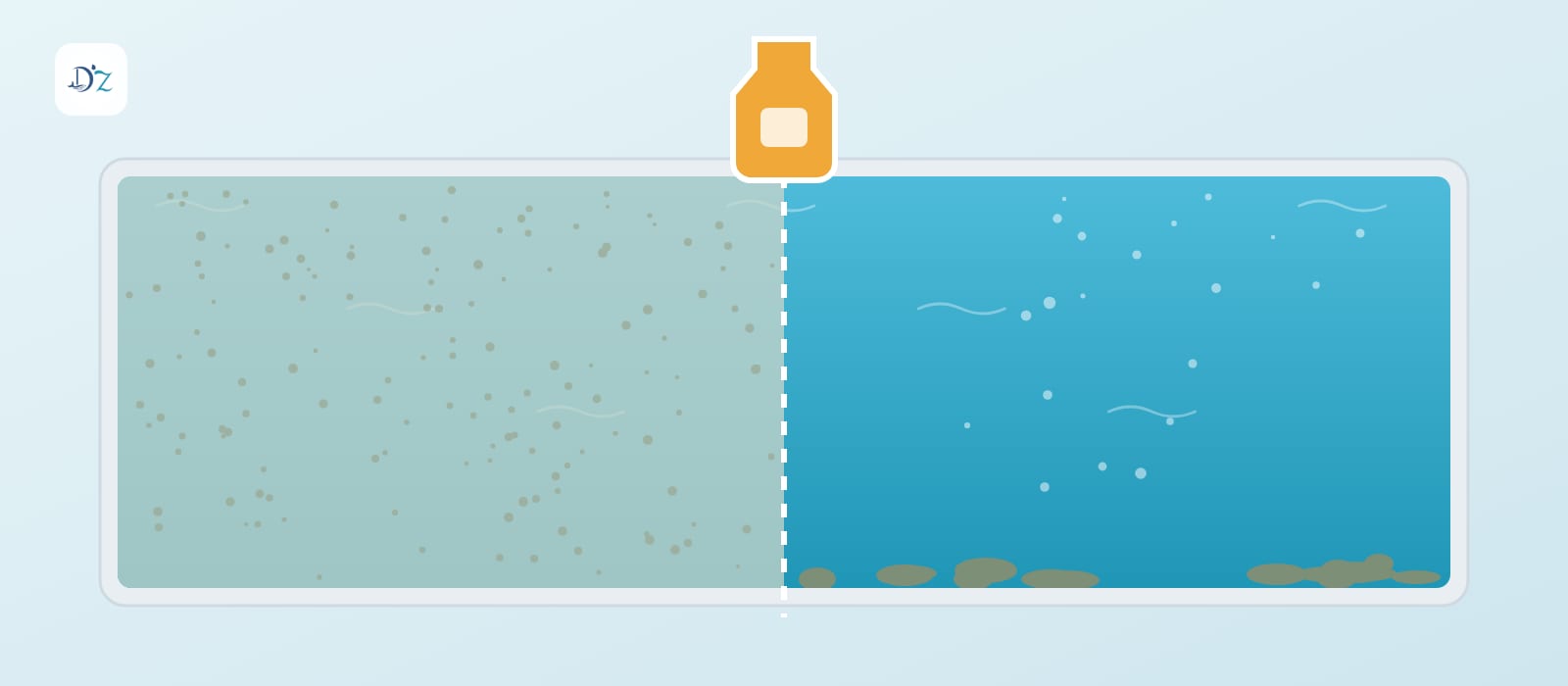
Which to use for your filter and how cloudy the water is, and step by step.
Read guide
Where mosquitoes really breed and what to do without putting insecticide in the water.
Read guideWho has to keep it, when to test, what to record and a free PDF template.
Read guide
What it is, when you need it, how to work out the dose and when you can swim again.
Read guide
Vacuum to waste, backwash and chlorine, in that order. You almost never need to drain it.
Read guide
At 40 °C chlorine is used up in hours. What to watch so it doesn't turn green.
Read guide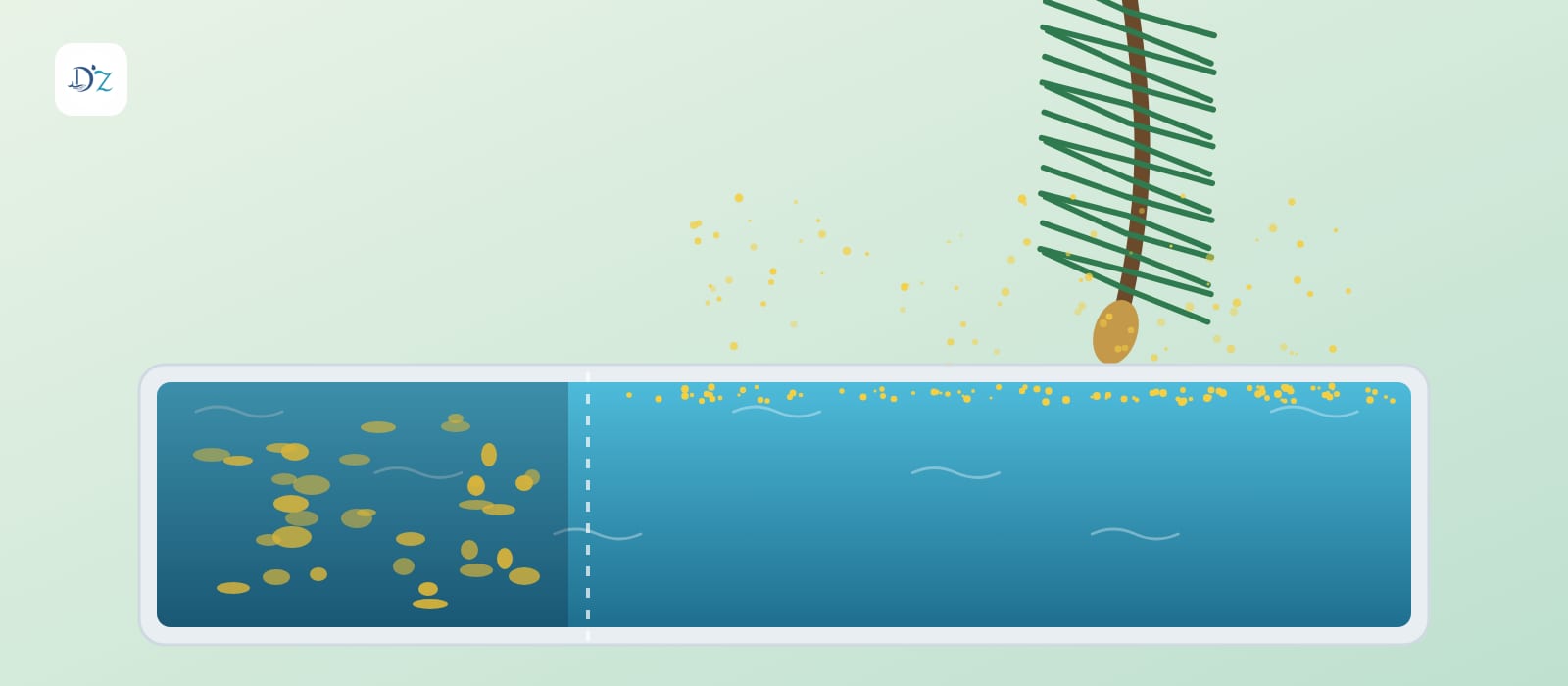
A simple test to tell them apart and how to treat each one.
Read guide
They measure different things, Redox measures effectiveness, not the amount of chlorine.
Read guide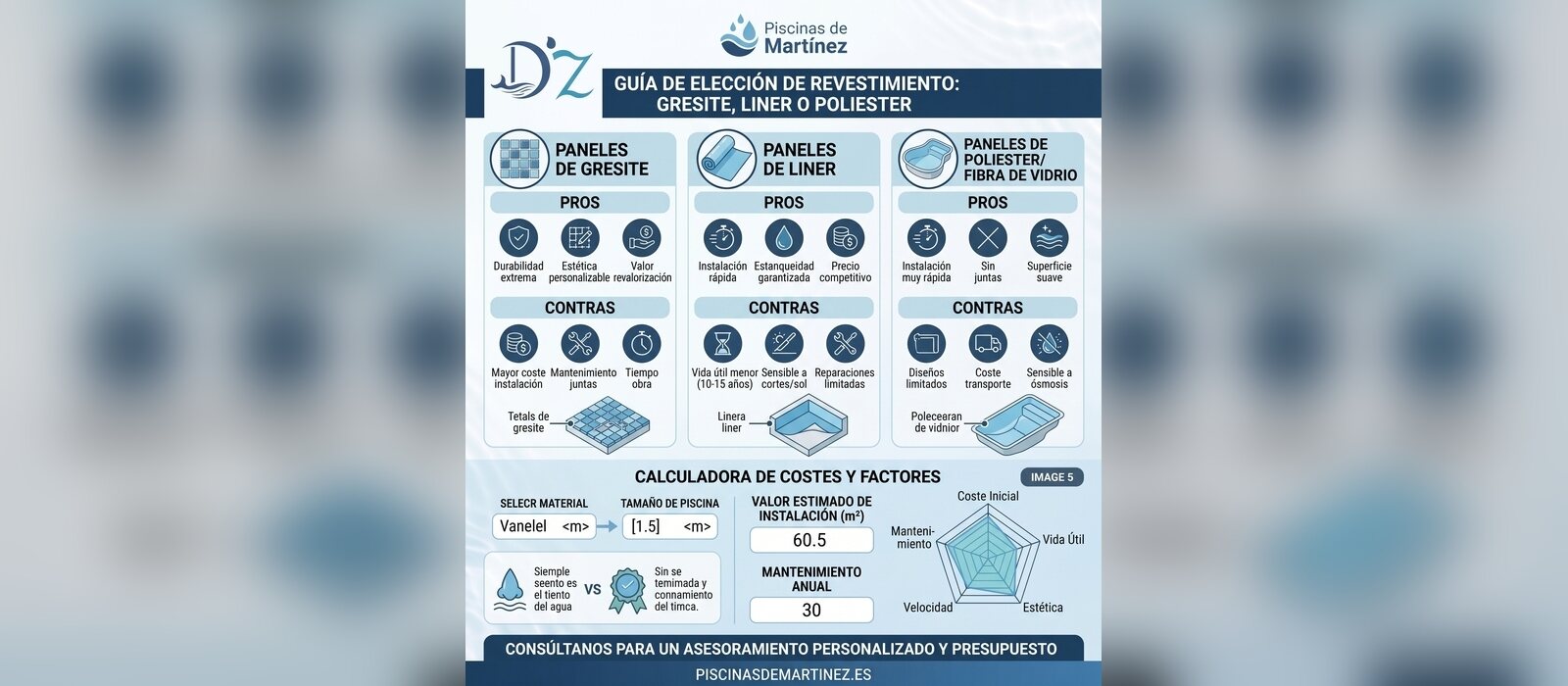
It's not just about looks, it directly affects how you need to care for the water.
Read guide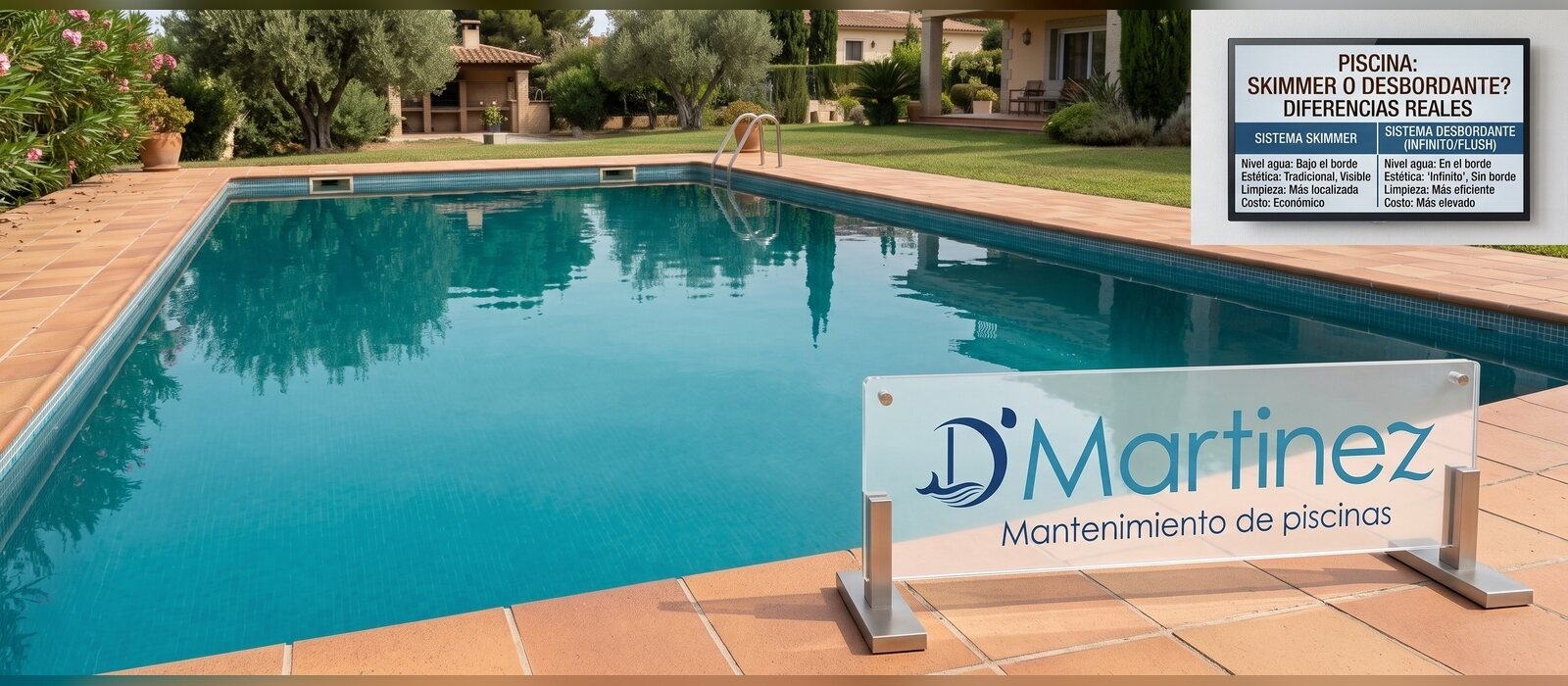
It changes maintenance, water consumption and budget.
Read guide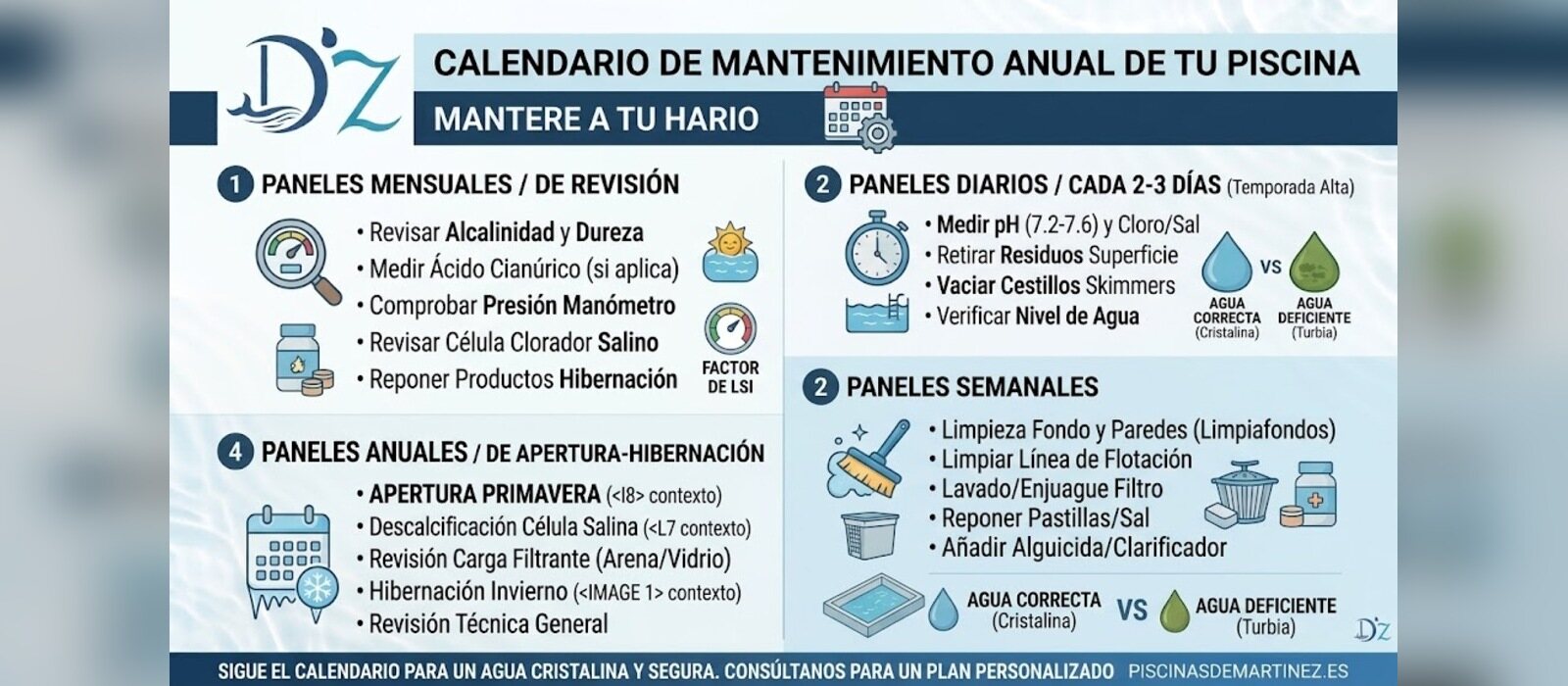
What to do every day, week, month and season, with links to each detailed guide.
Read guide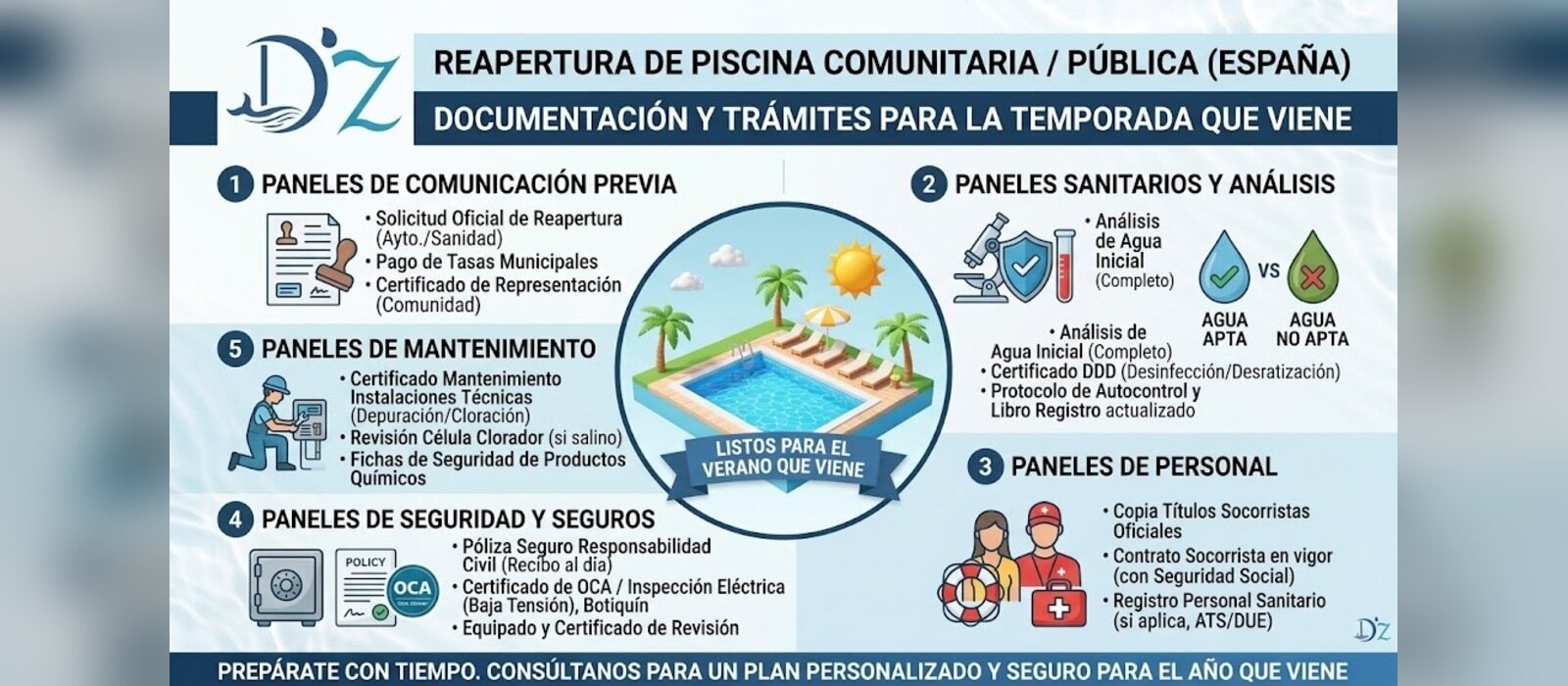
The checklist of paperwork a community should have ready before opening.
Read guide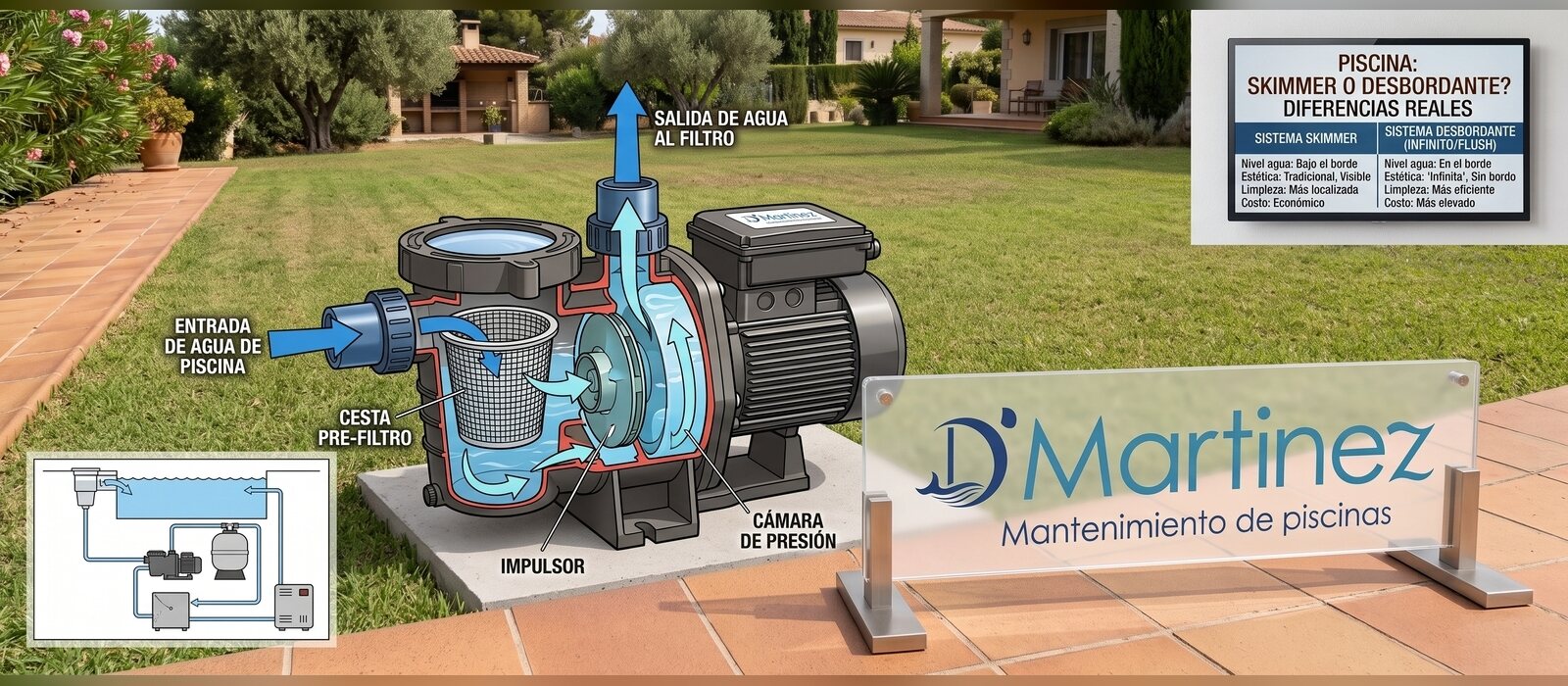
The heart of the filtration system, its parts and the signs that something's wrong.
Read guide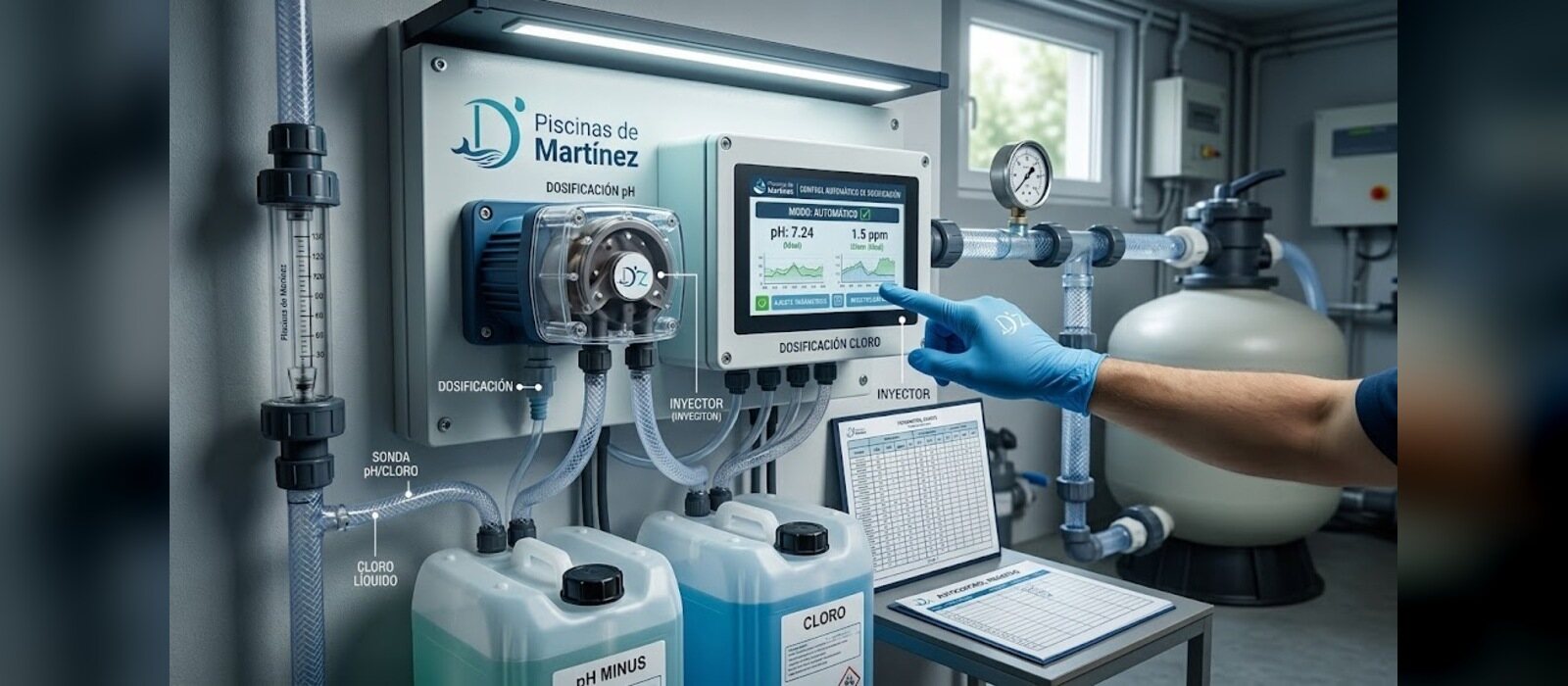
With bathers present, dosing by hand stops being a legal option.
Read guide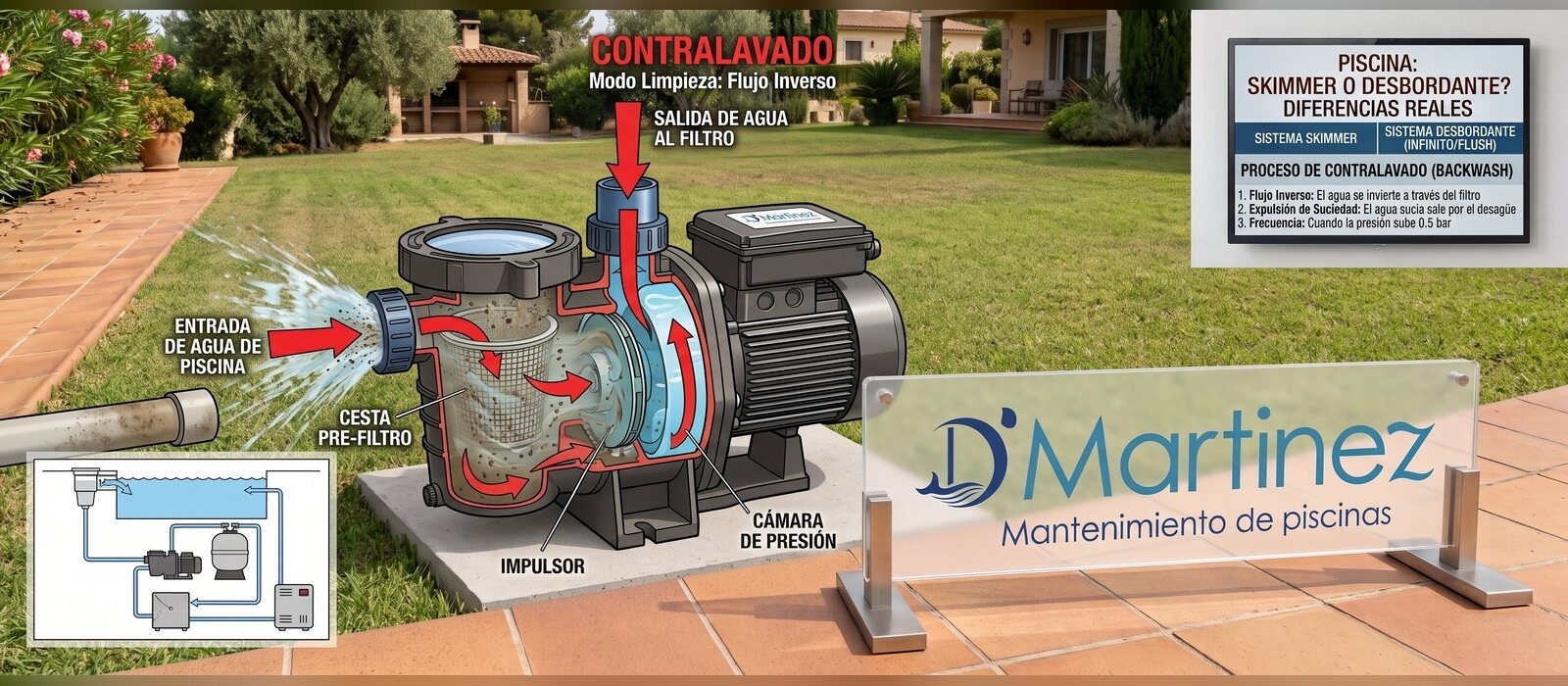
The exact steps, and why doing it too much makes filtration worse instead of better.
Read guide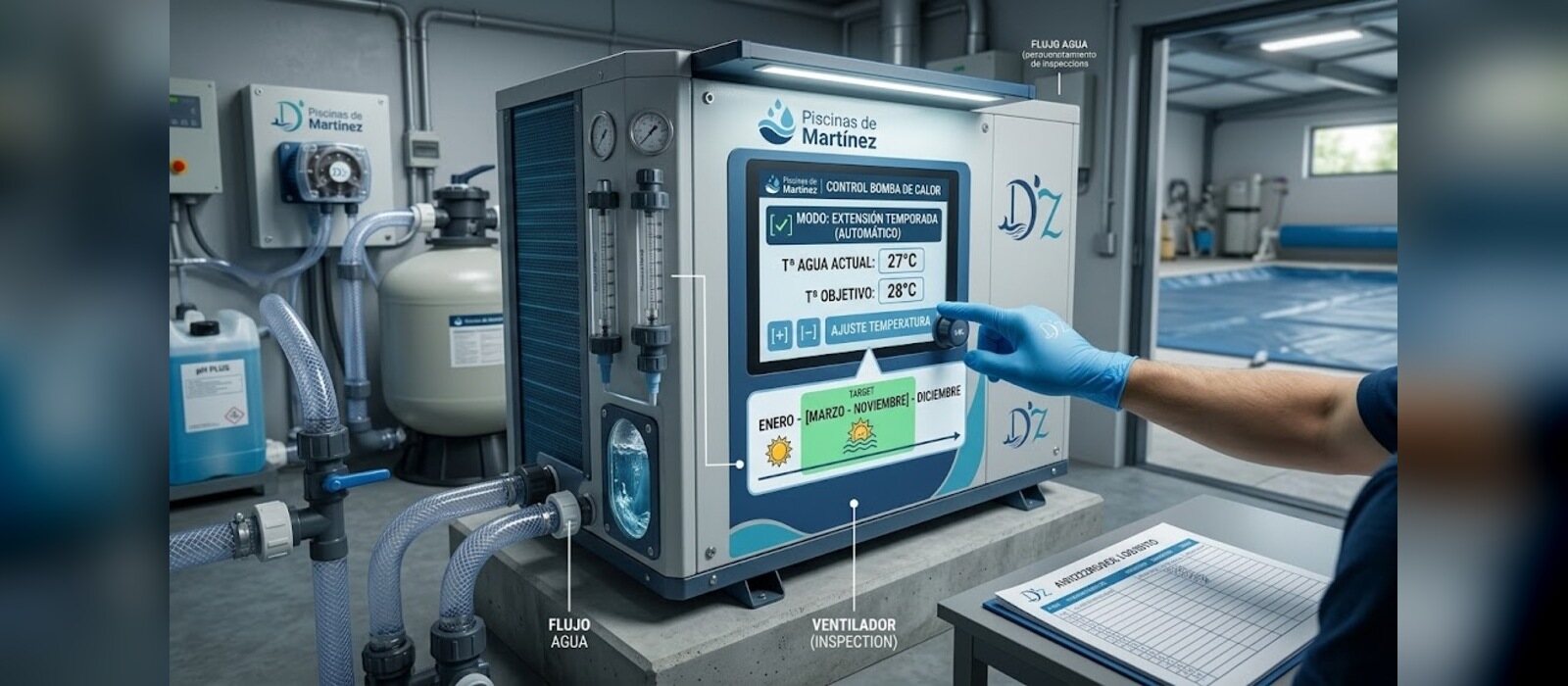
Raises the temperature 0.5-2°C a day, with 4-6 times the performance of a regular heater.
Read guideEar infections, dermatitis, irritation... why the water's appearance doesn't always tell the whole story.
Read guide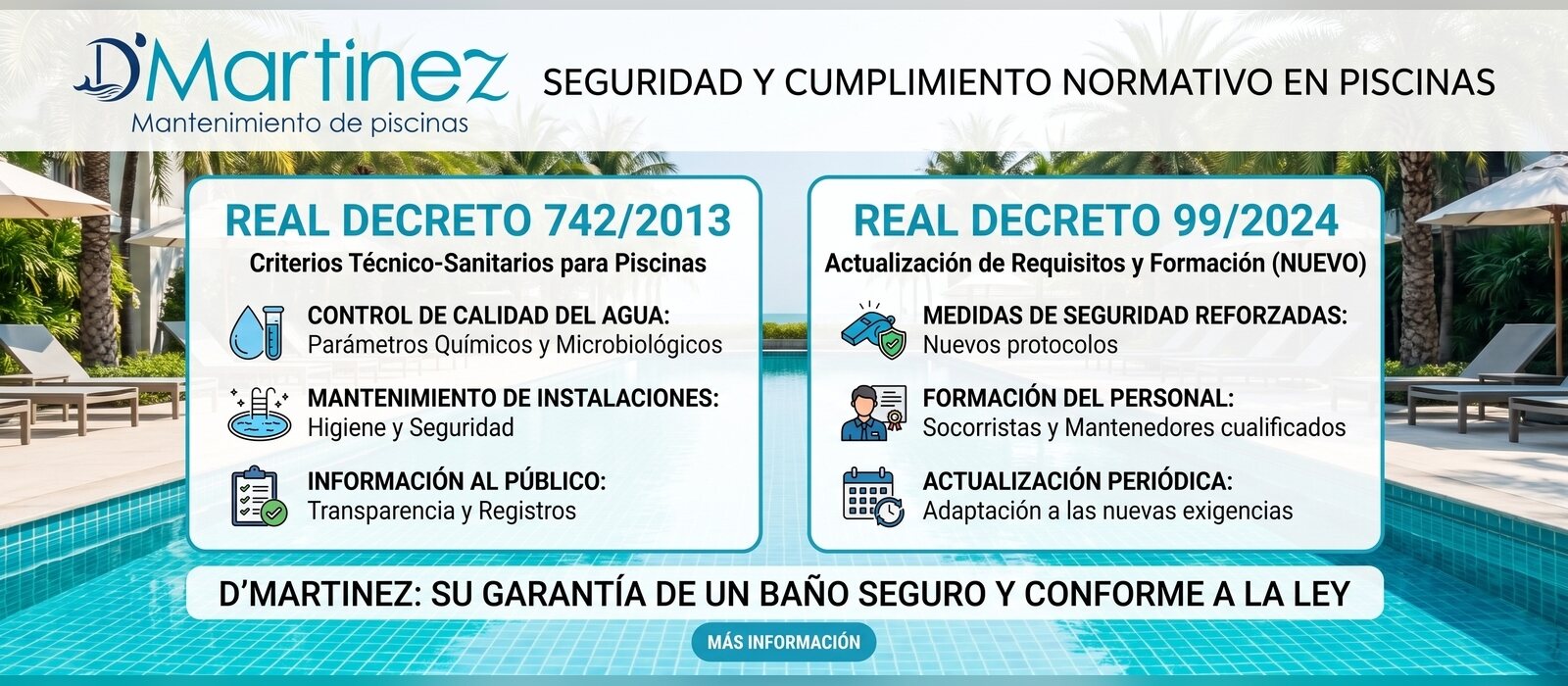
Water checks, turbidity, lifeguards and the penalties if your community doesn't comply.
Read guide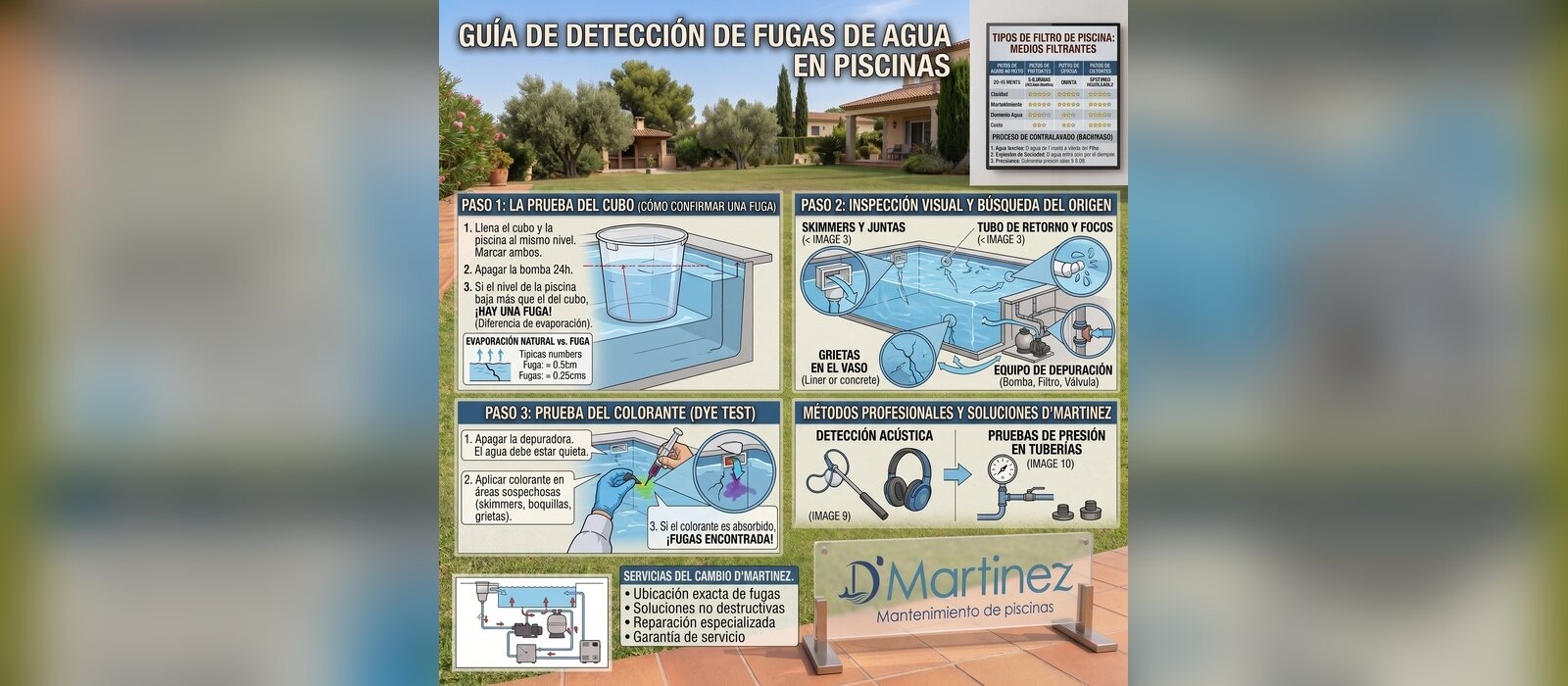
The bucket test tells a real leak apart from normal evaporation in just 24 hours.
Read guide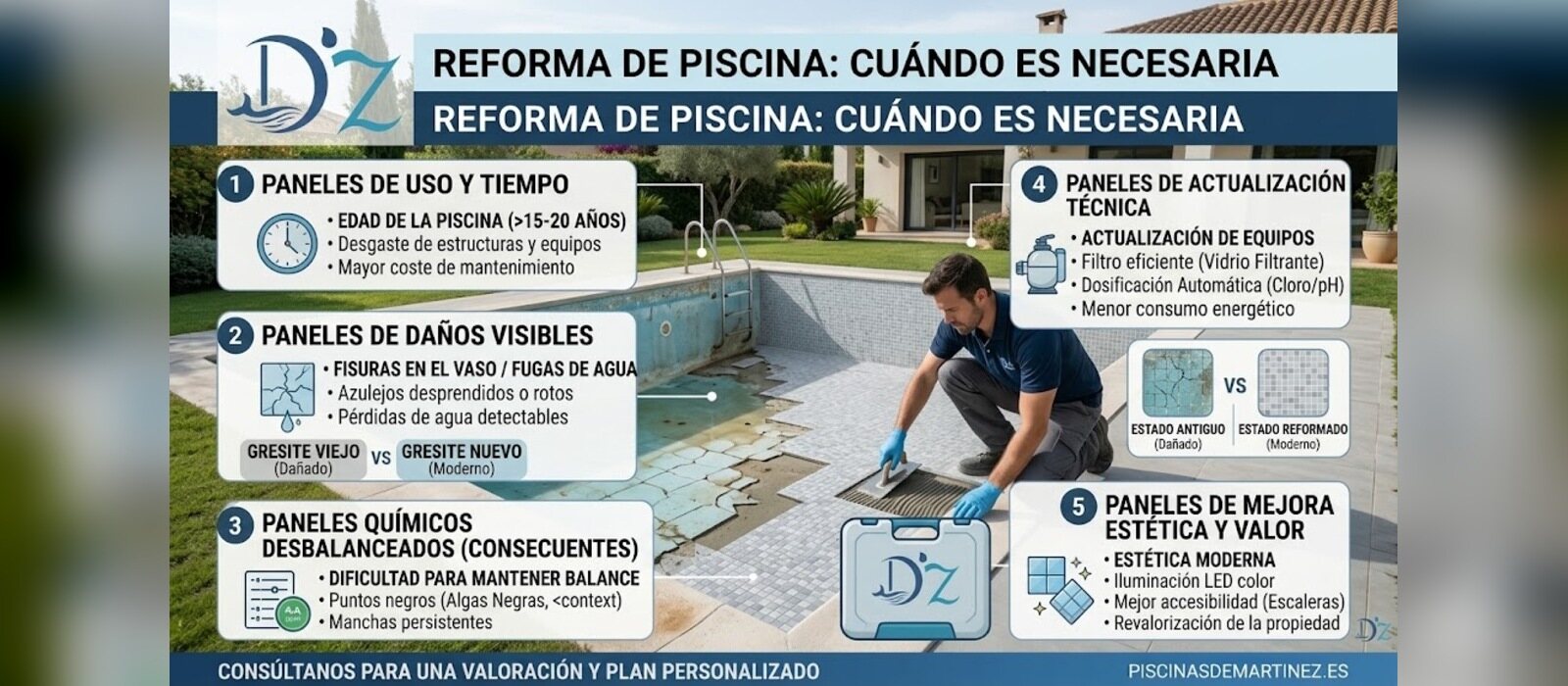
Recurring leaks, worn-out lining, growing cracks, the signs we use ourselves to make the call.
Read guide
The mistakes that repeat most, season after season, and that explain most problems.
Read guide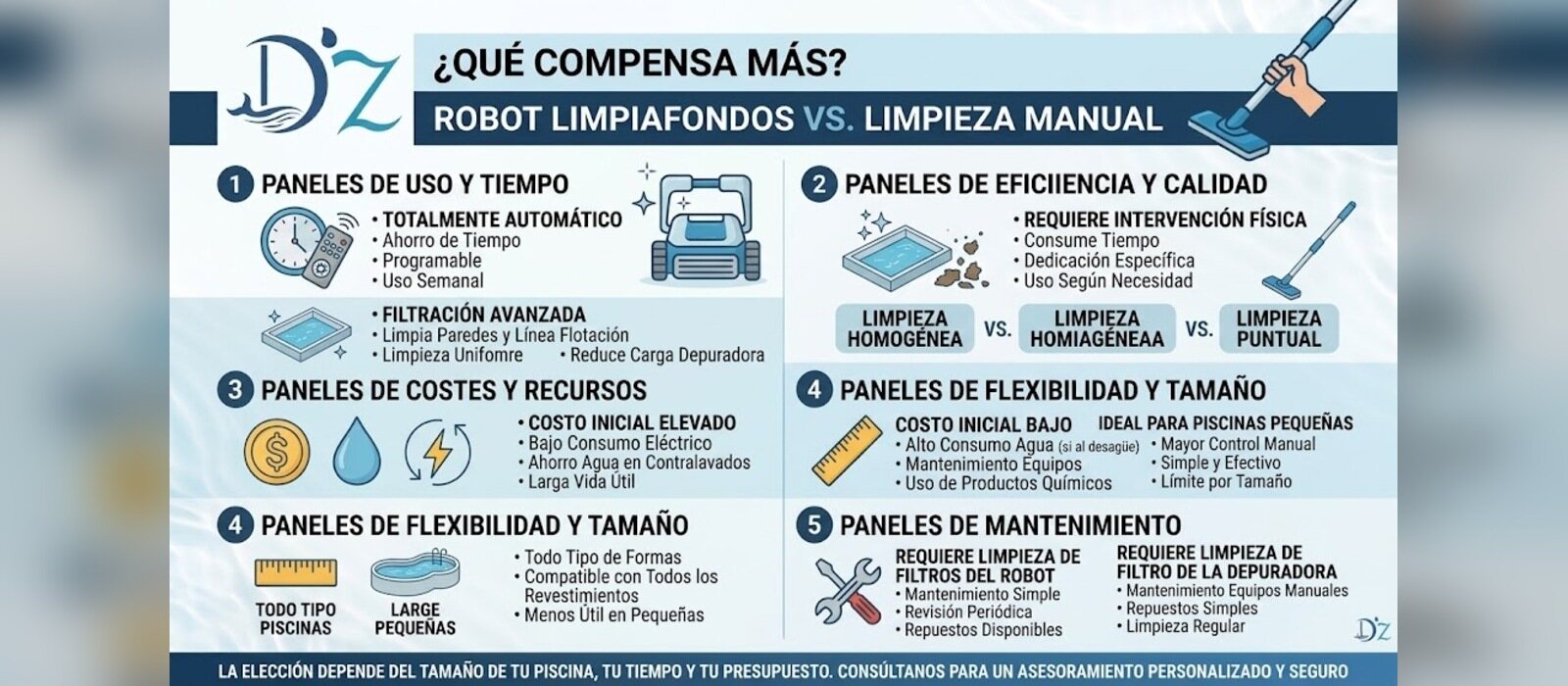
It's not about which system cleans better, it's about which routine fits you, and which areas still need a hand.
Read guide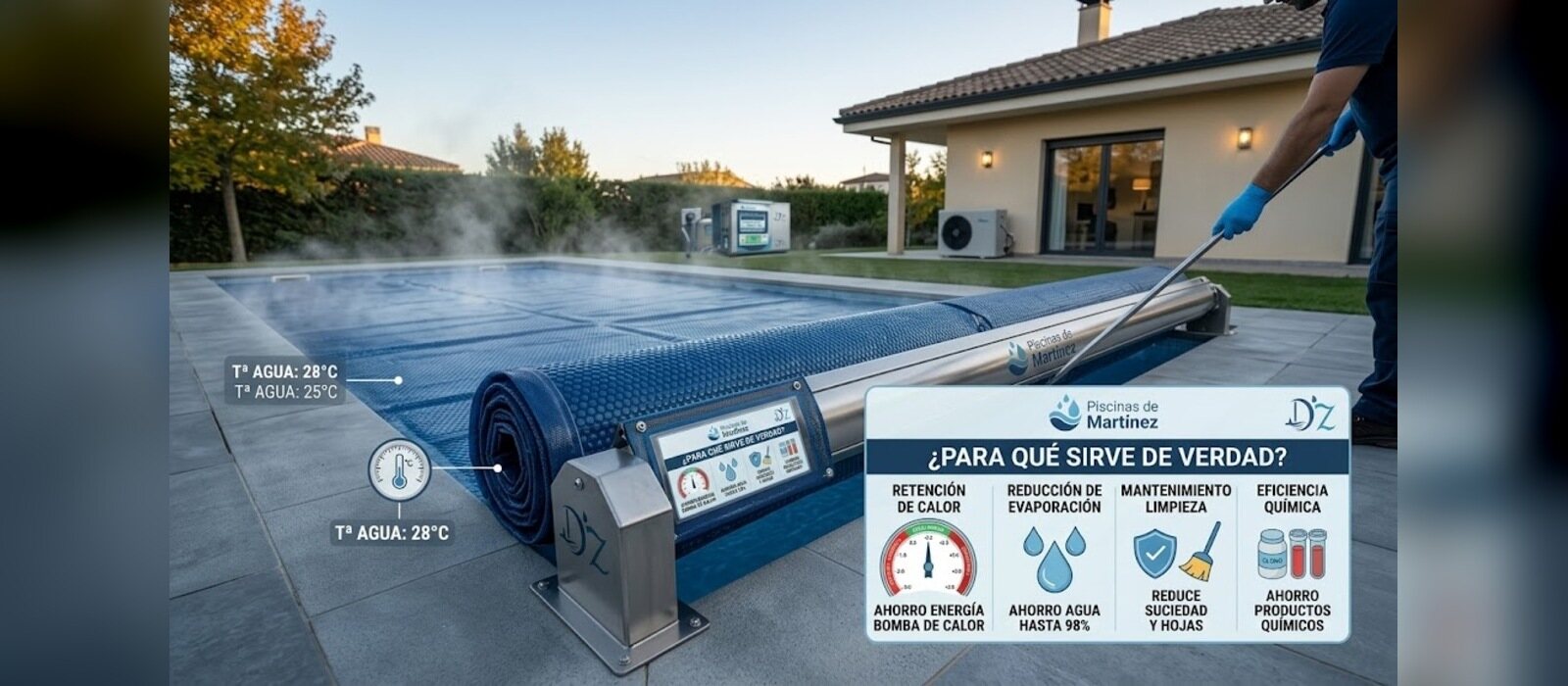
Cuts evaporation by up to 95% and protects chlorine from the sun, much more than a simple heater.
Read guide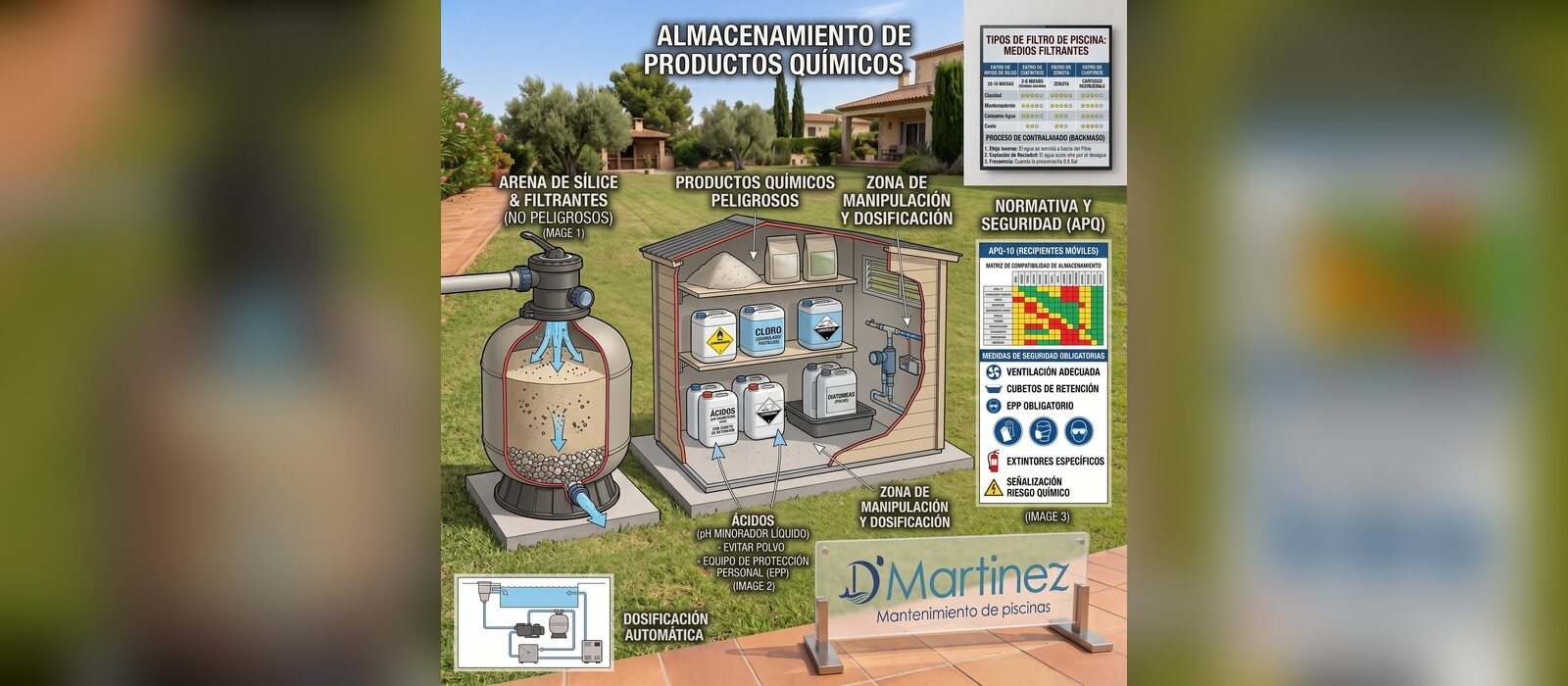
Why you should never mix them, and what the regulations require of communities regarding the storage room.
Read guide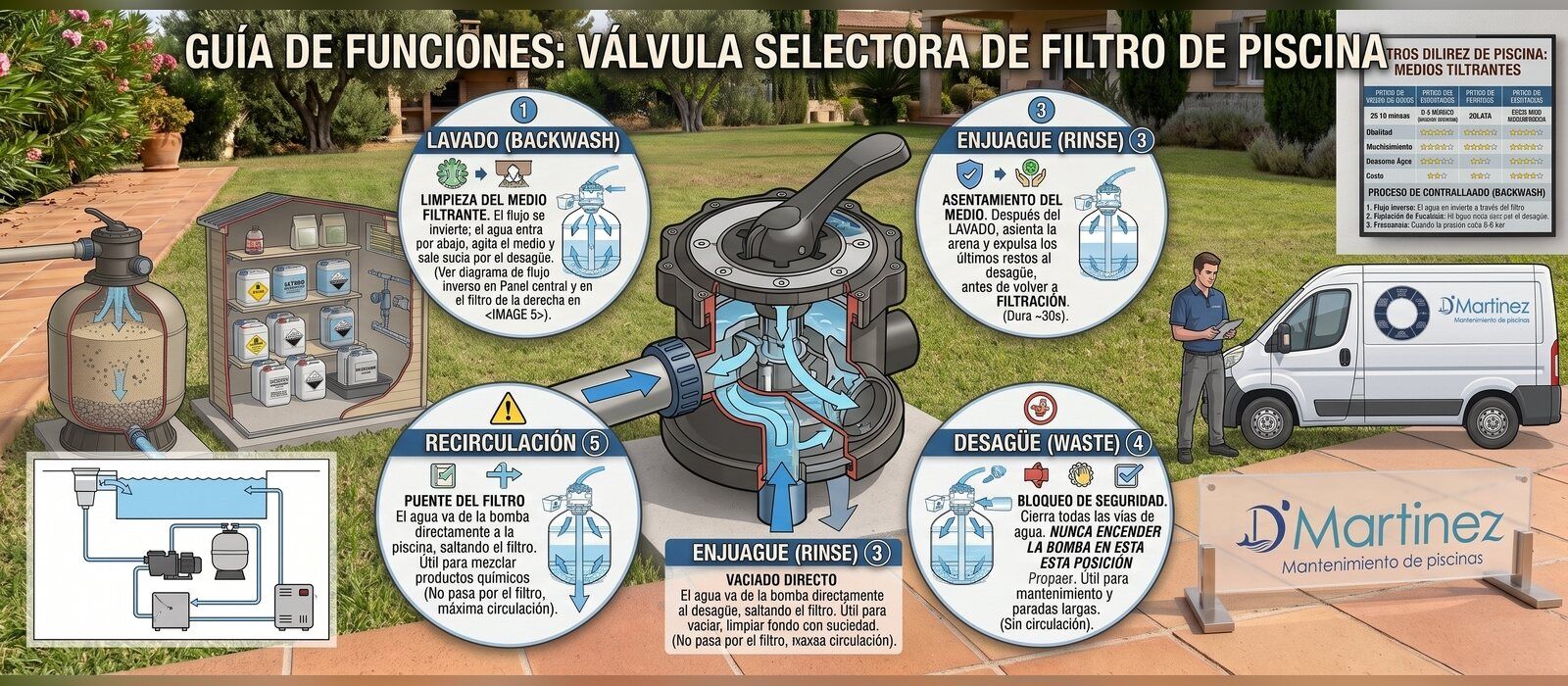
Filter, backwash, rinse, recirculate, waste and closed, and the order that actually matters.
Read guide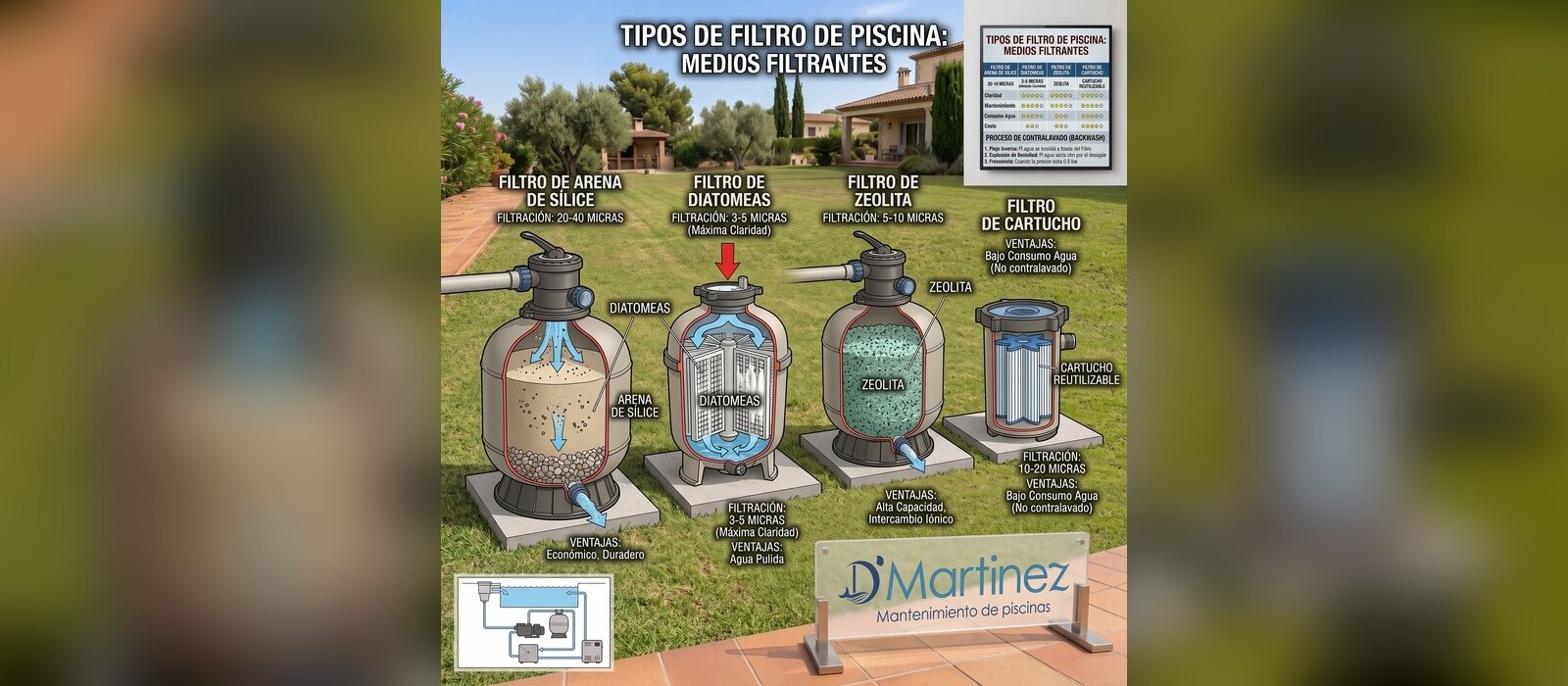
Sand, recycled glass, zeolite, cartridge or diatomaceous earth, which filters best and which suits which pool.
Read guideMandatory checks, the Control Logbook and documentation for the season opening.
Read guide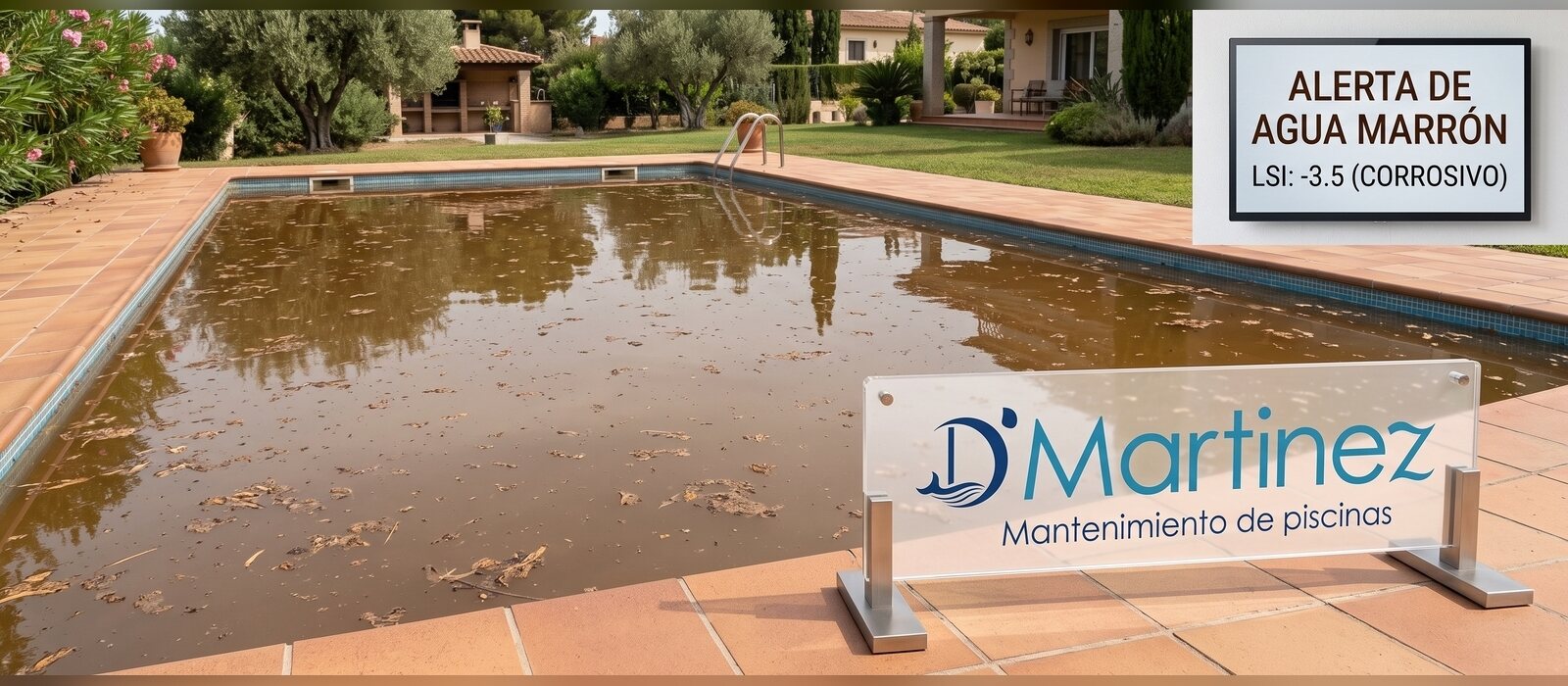
Filtration, calcium hardness or dissolved iron, different causes from green water, with different treatments.
Read guide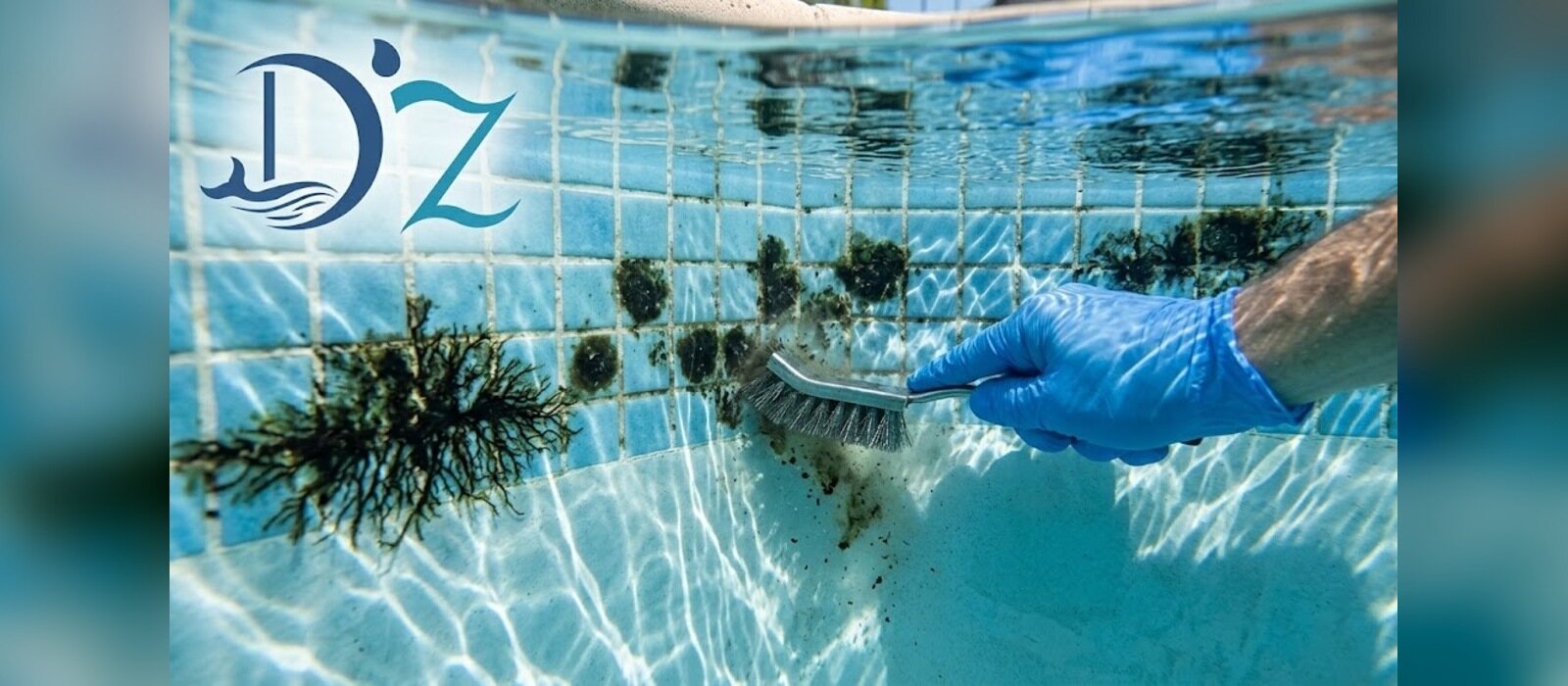
They're not really algae, but cyanobacteria with a protective layer that's very resistant to chlorine. What it really takes to get rid of them.
Read guide
Not all stains are the same, metallic or limescale stains each need a different treatment. How to tell them apart.
Read guide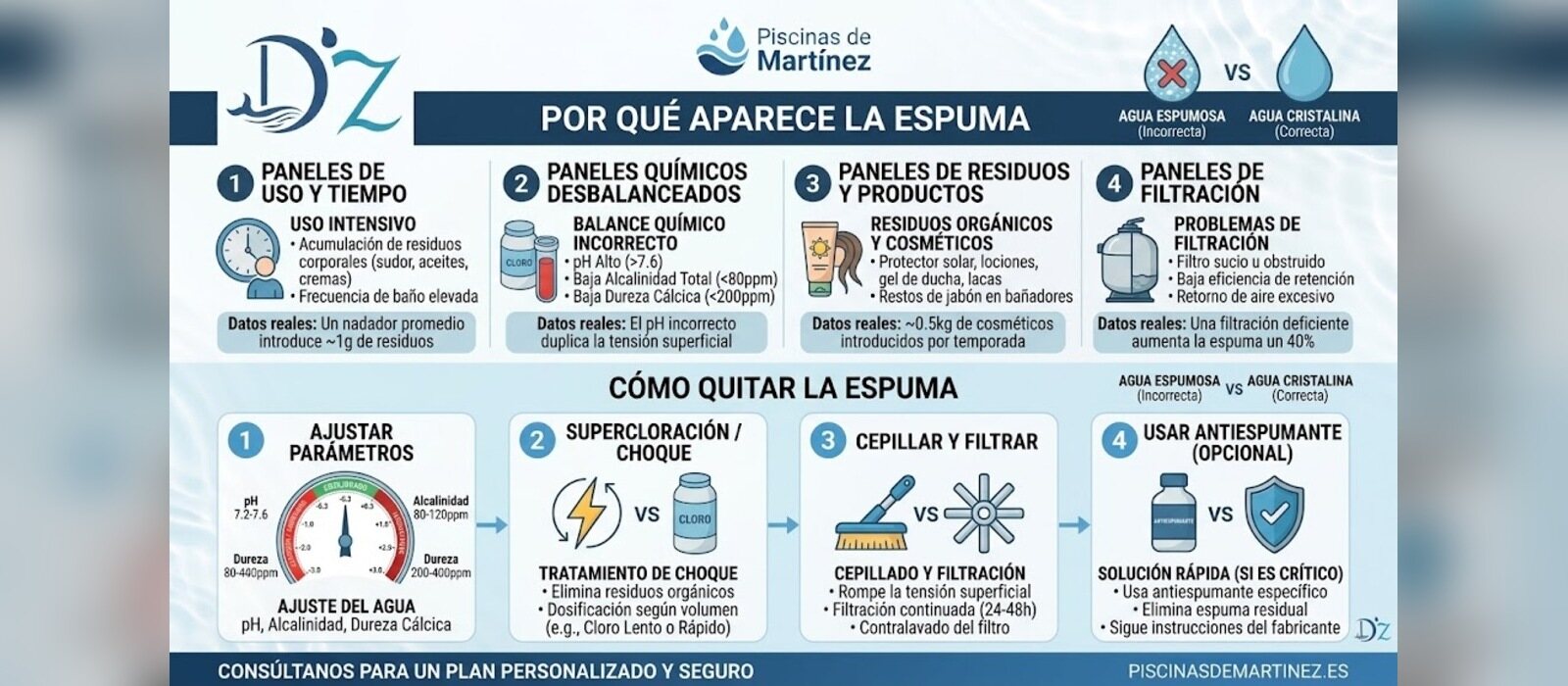
It almost always comes from soaps, sunscreens or a low-quality algaecide. Why it happens and how to fix it.
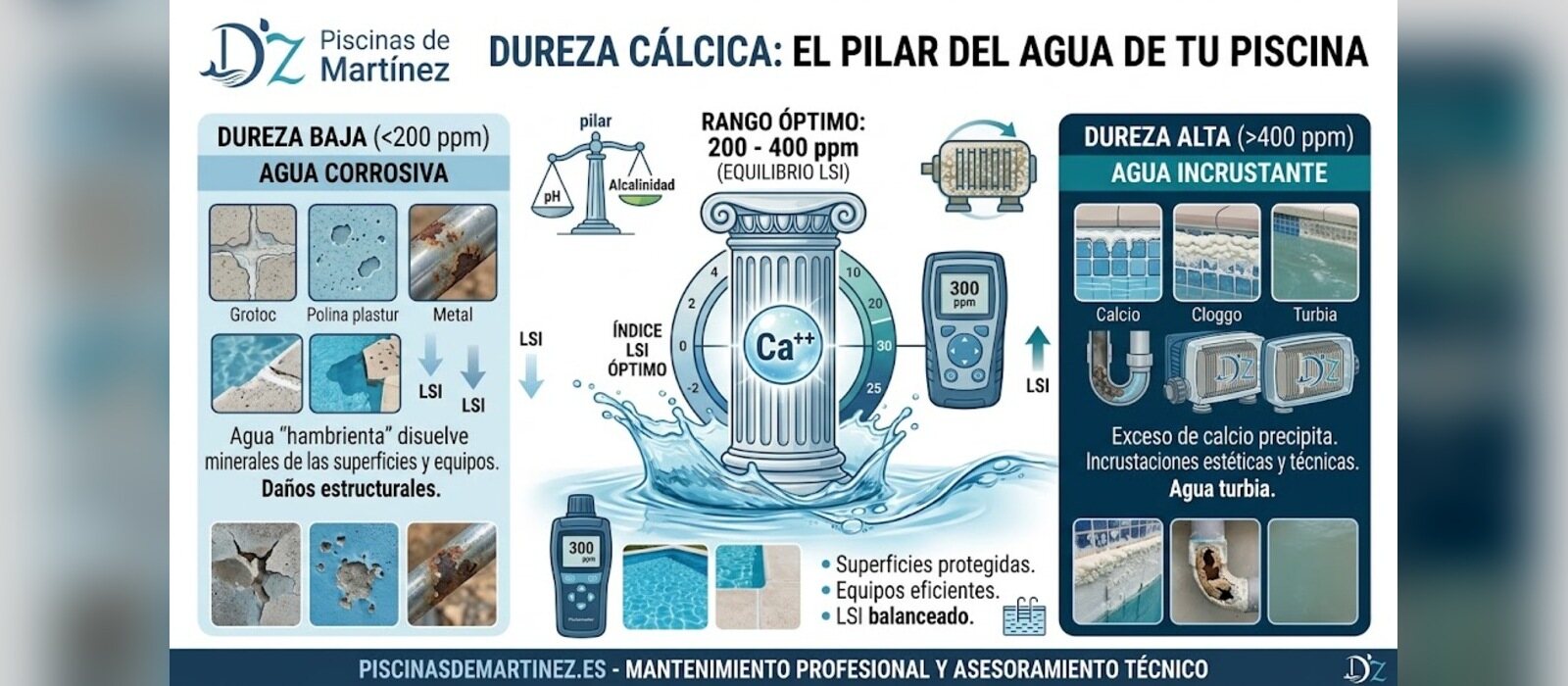
Read guideThe fourth parameter that decides whether your water is corrosive or scale-forming, alongside pH, alkalinity and cyanuric acid.
Read guide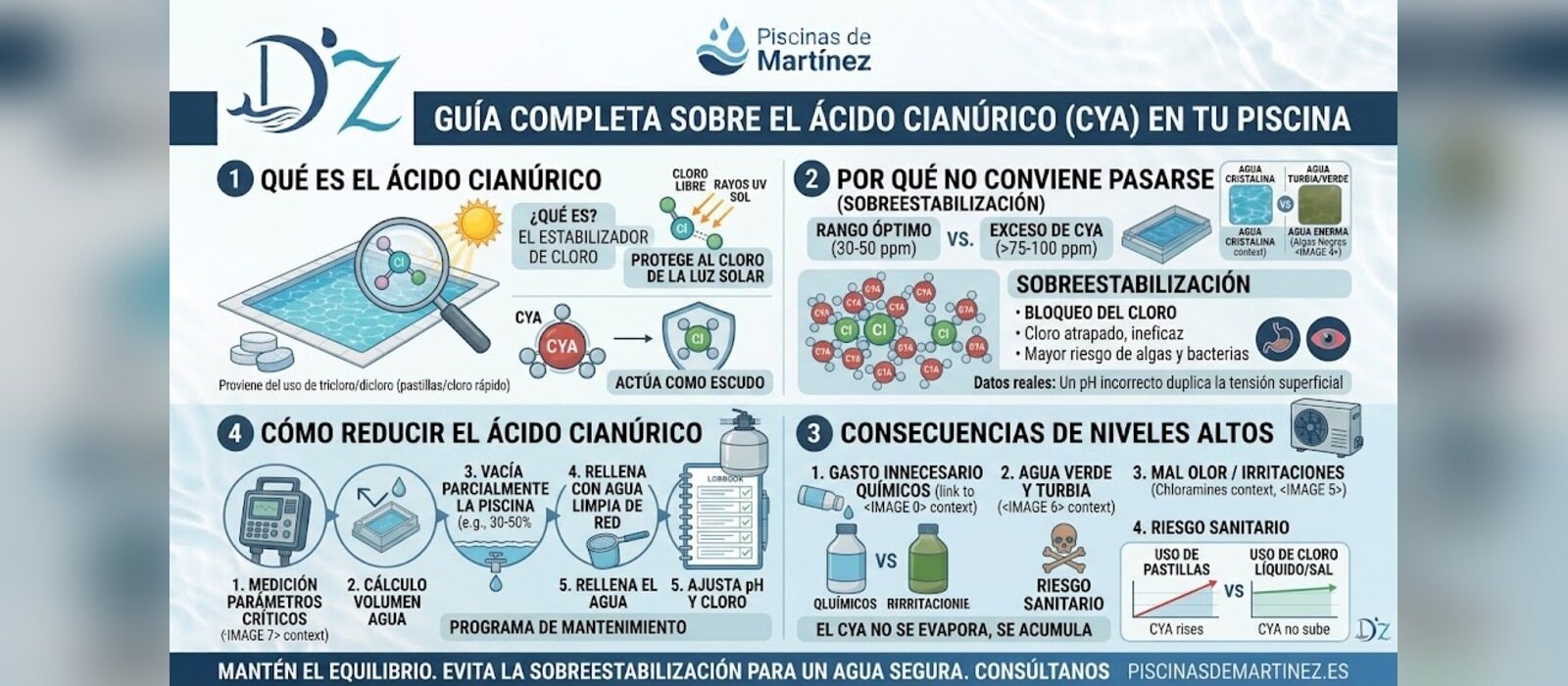
It protects chlorine from the sun, but too much does exactly the opposite of what it's supposed to prevent.
Read guideA kilo of chlorine isn't always a kilo of chlorine. Why a 70% bottle and a 56% bottle don't perform the same.
Read guide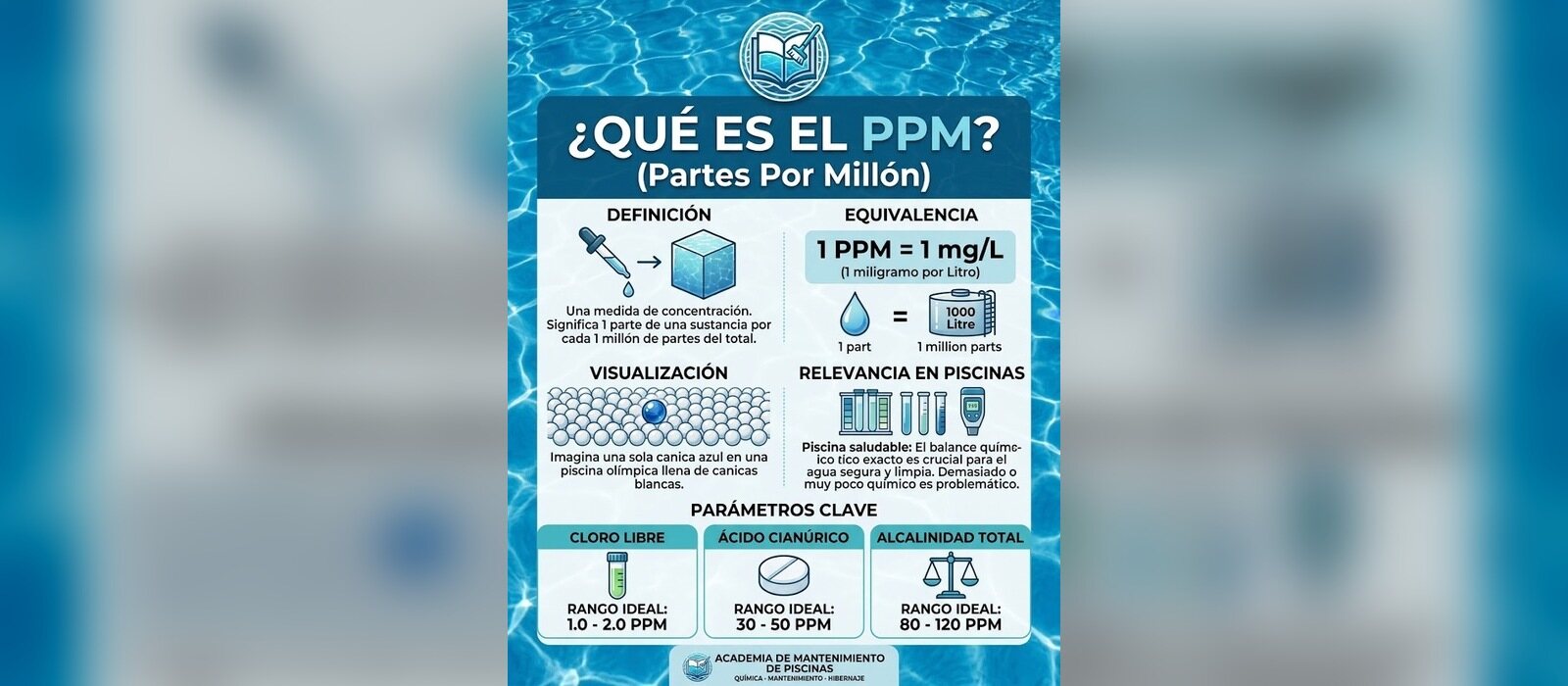
It shows up on any test strip, but almost no one knows what it means. What parts per million are and why it's the industry's standard unit.
Read guide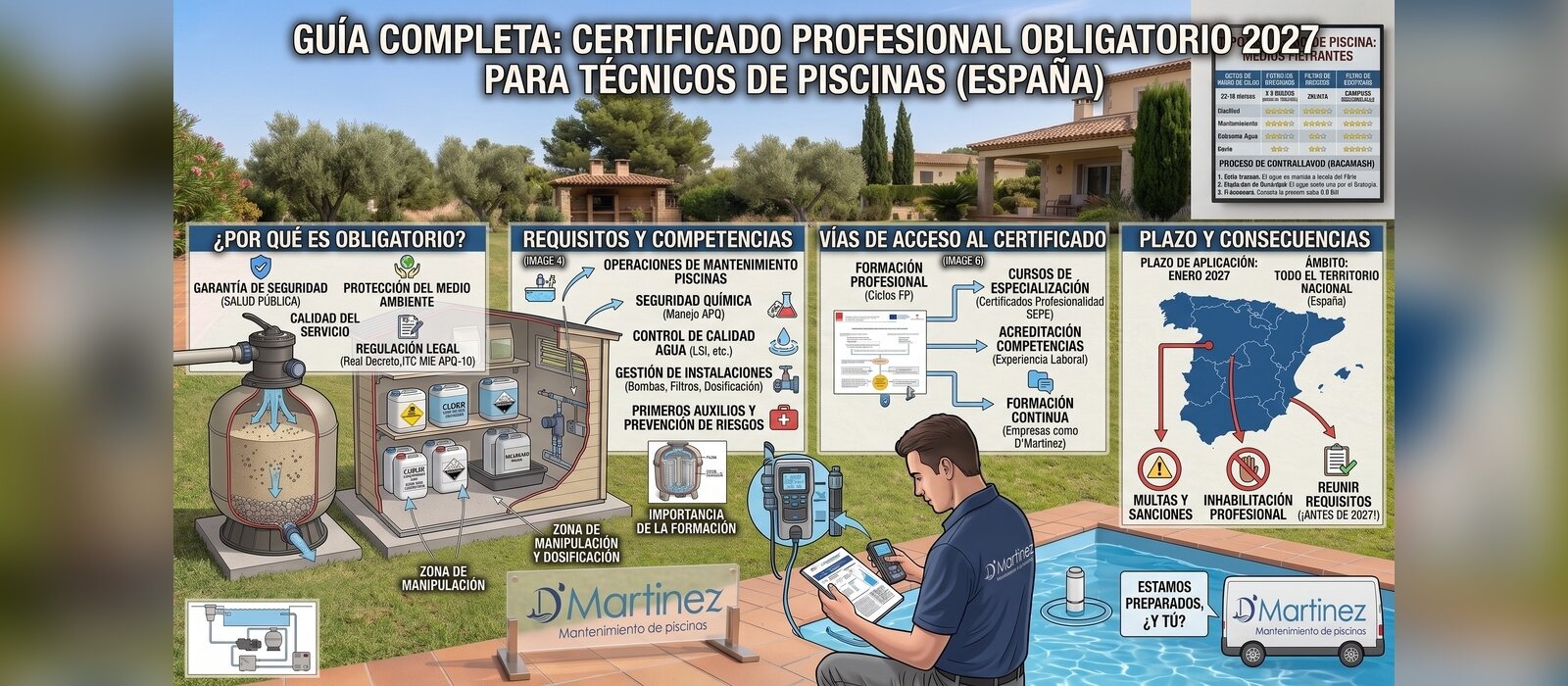
From January 2, 2027, staff who treat the water in pools for public or collective use must hold the SEA757_2 Professional Certificate.
Read guide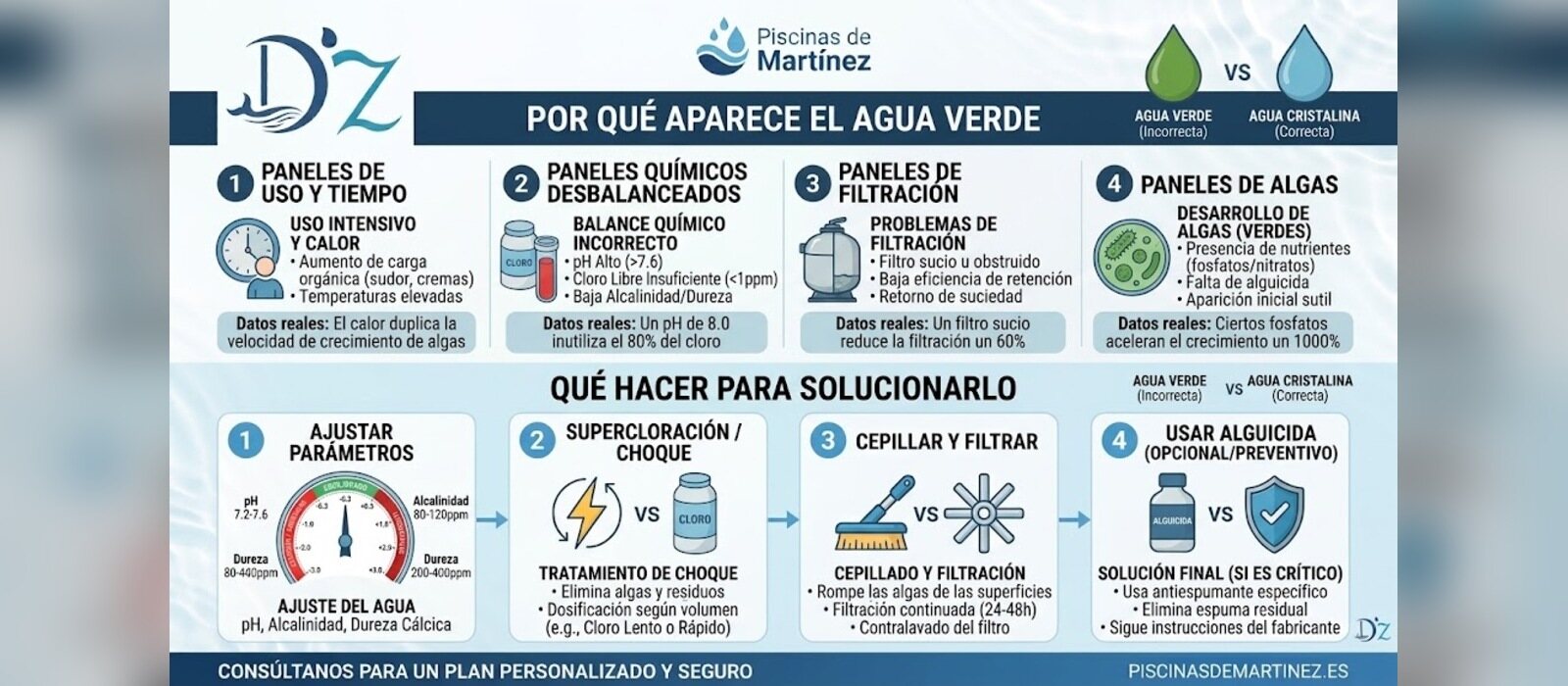
One of the most common summer emergencies. Why algae appear and what to do the moment you see green water.
Read guideA very strong smell doesn't mean there's too much chlorine, it means just the opposite. What chloramines are and how to correct them.
Read guide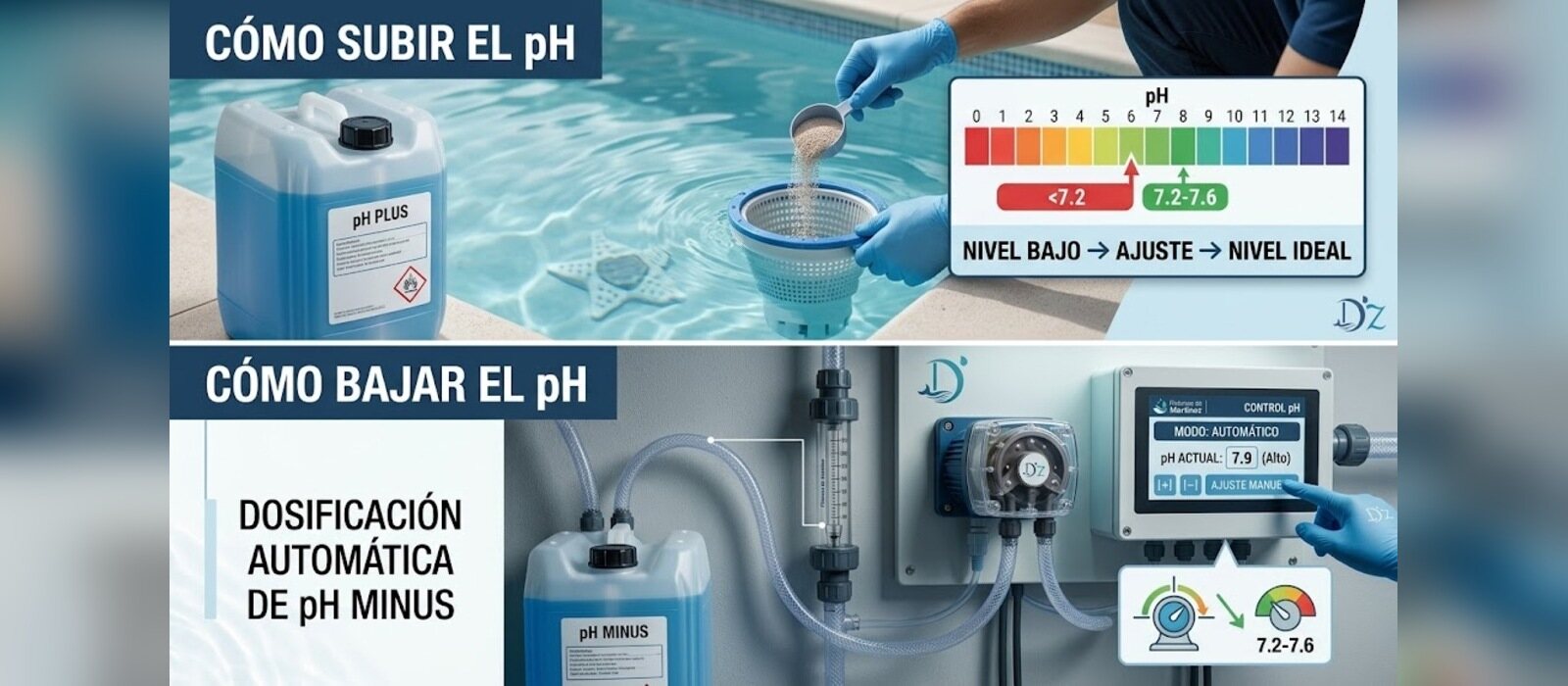
The parameter that gets thrown off balance the most, and drags all the others with it. How to tell what's wrong and fix it safely.
Read guide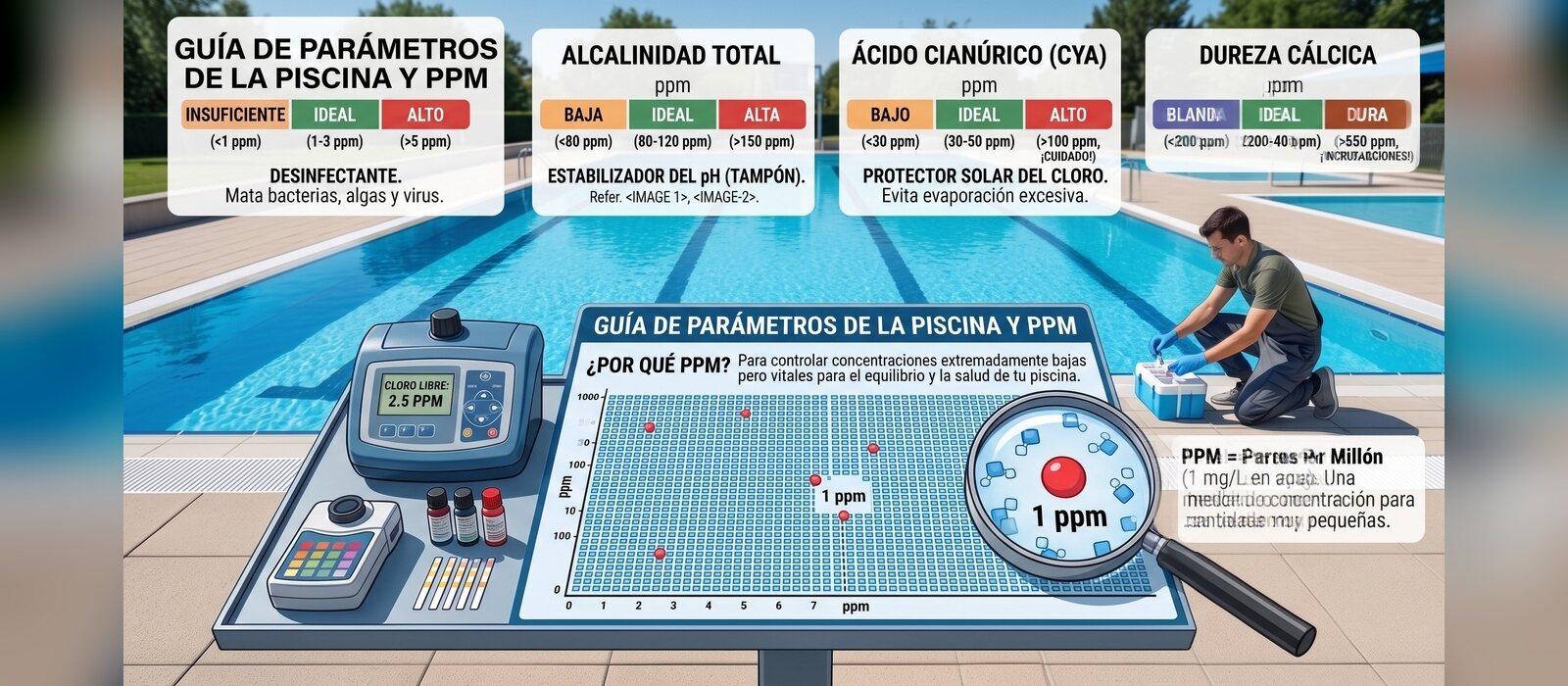
What pH, chlorine, alkalinity and hardness are, what range they should be in, and what happens if they're not kept under control.
Read guide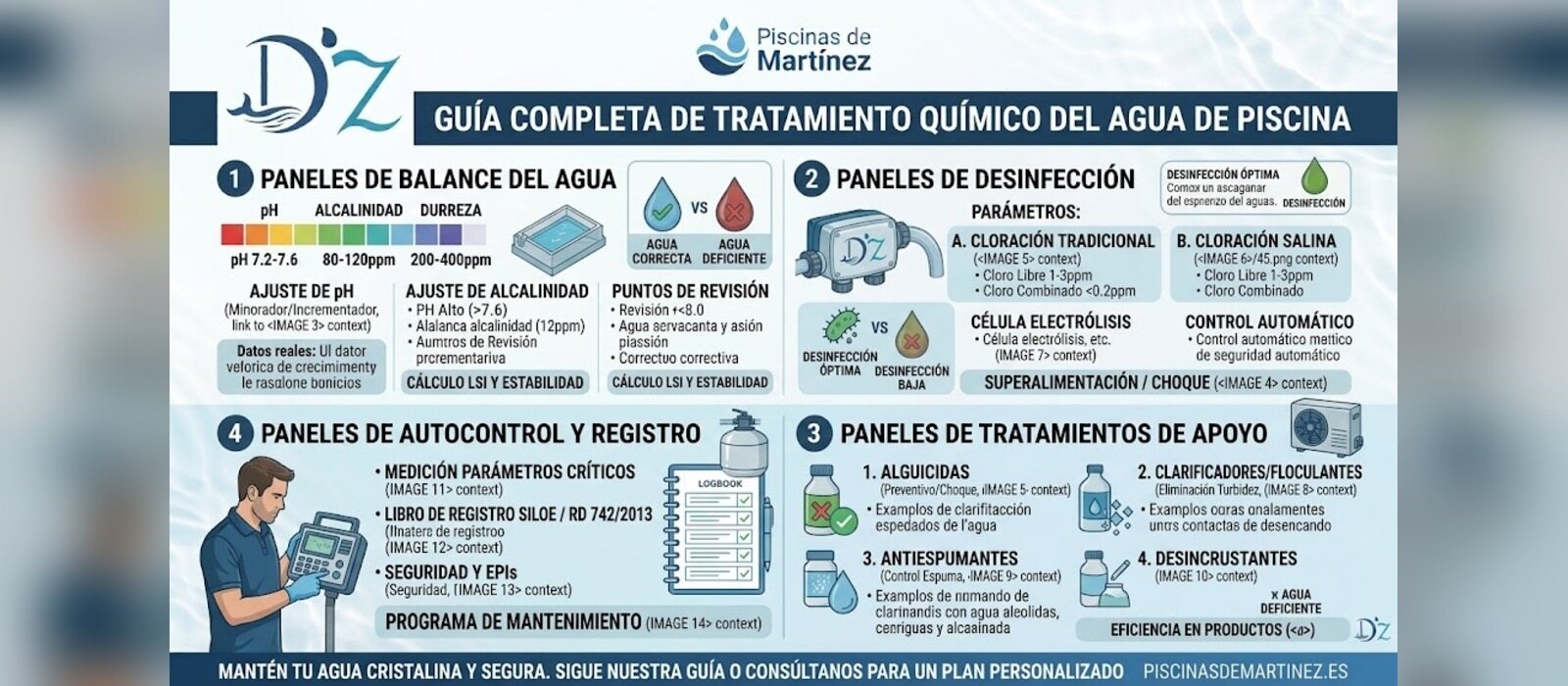
Chloramines, shock treatment, water balance and how to fix the most common problems: cloudy, green, stained.
Read guide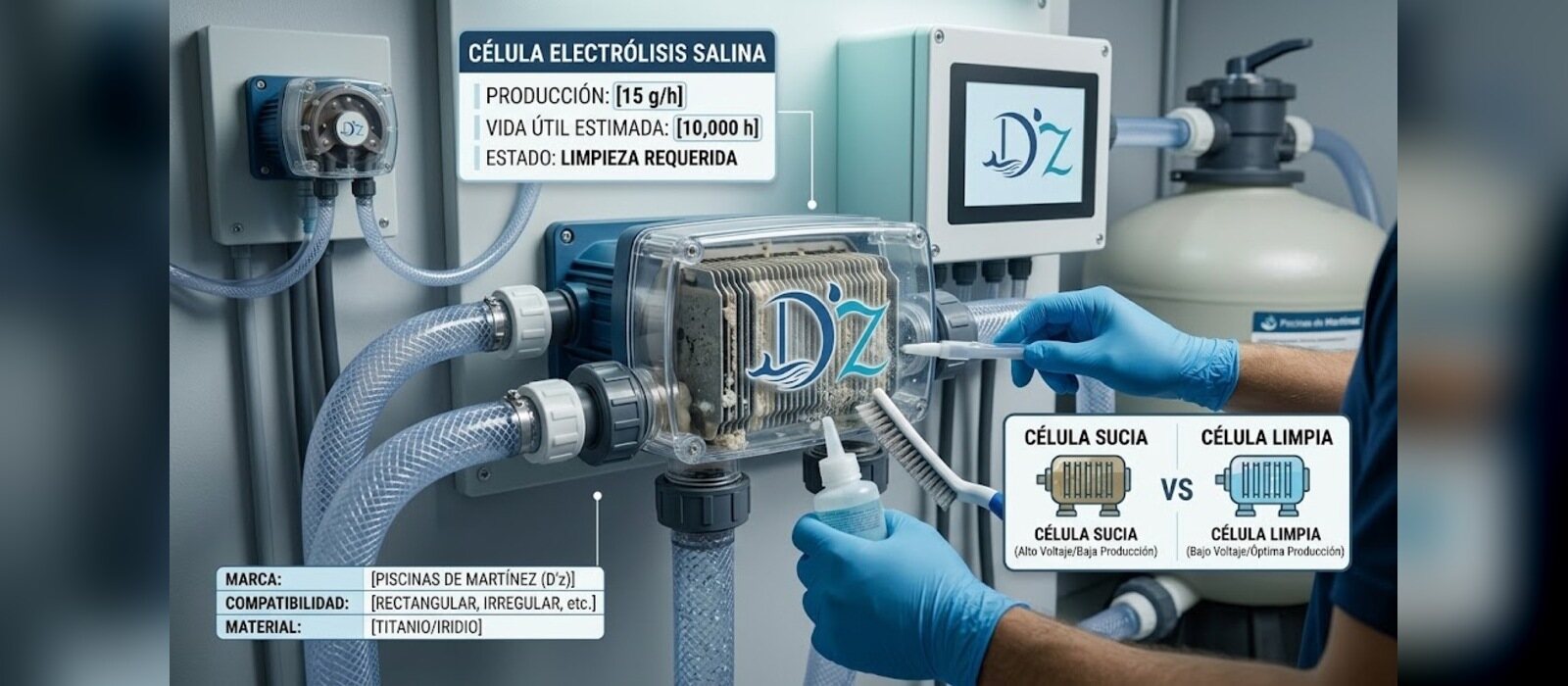
Advantages of a salt chlorinator over traditional chlorine, and how we install it in your pool.
Read guide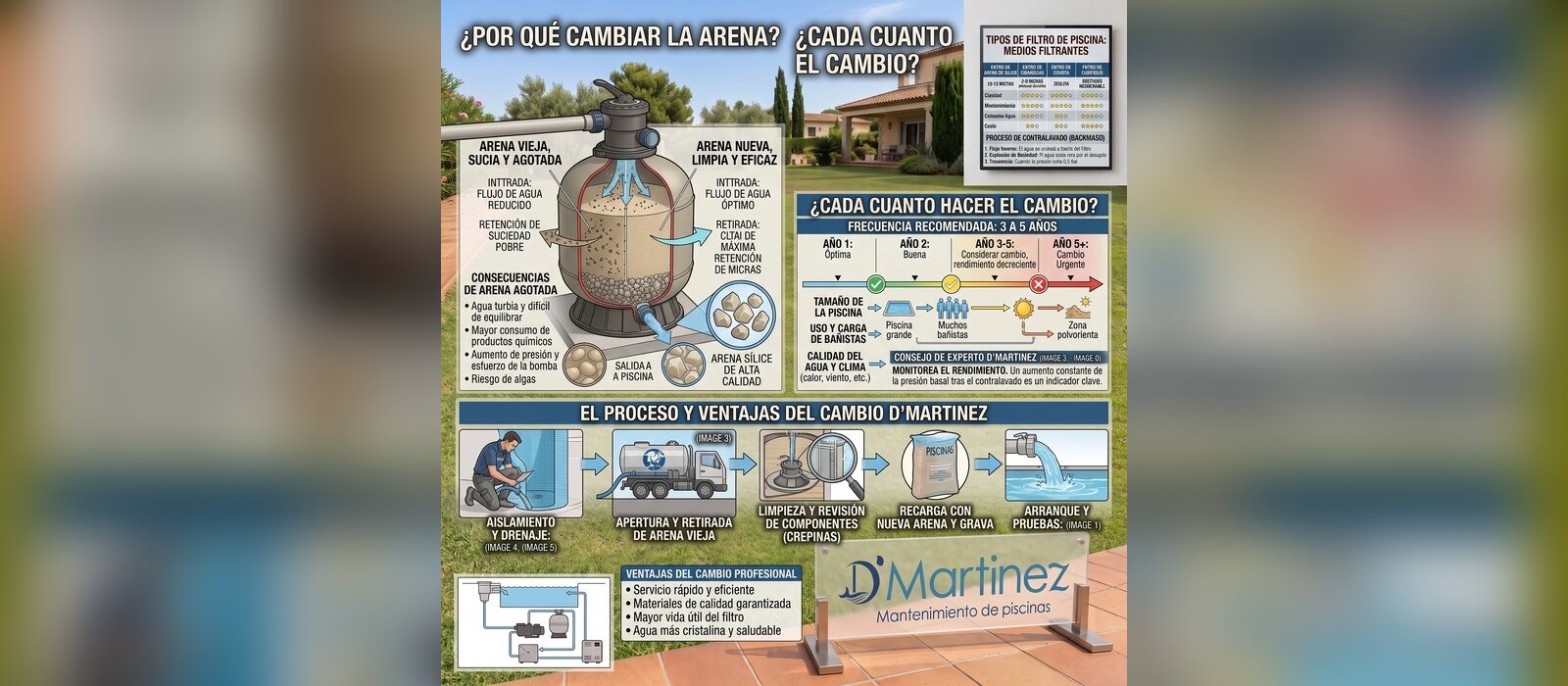
Sand compacts and loses effectiveness over the years. Signs it's time to change it and the benefits of doing it in time.
Read guideWhat the cell is, how long it lasts, how to care for it, and the clear signs it's time to replace it.
Read guide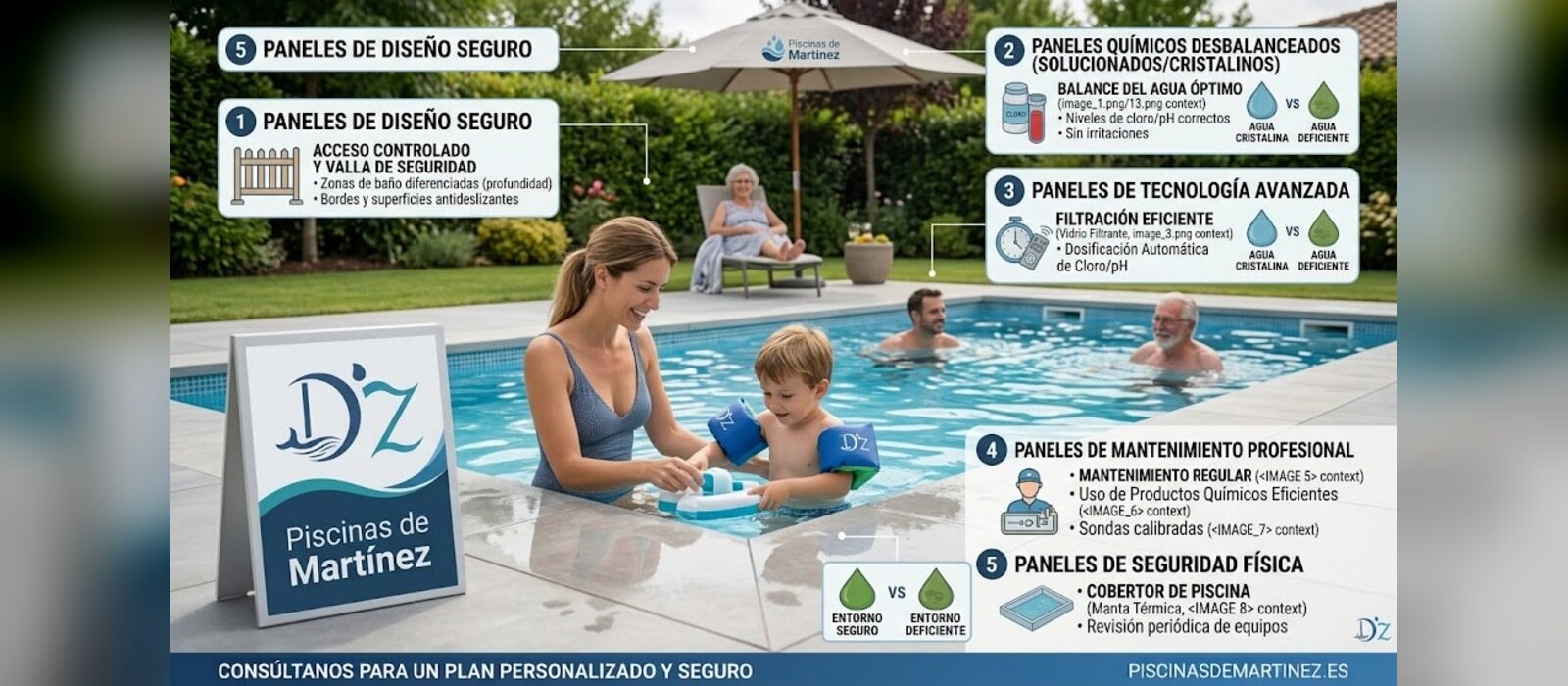
Barriers, supervision and preparedness: the three layers of protection that prevent most accidents.
Read guide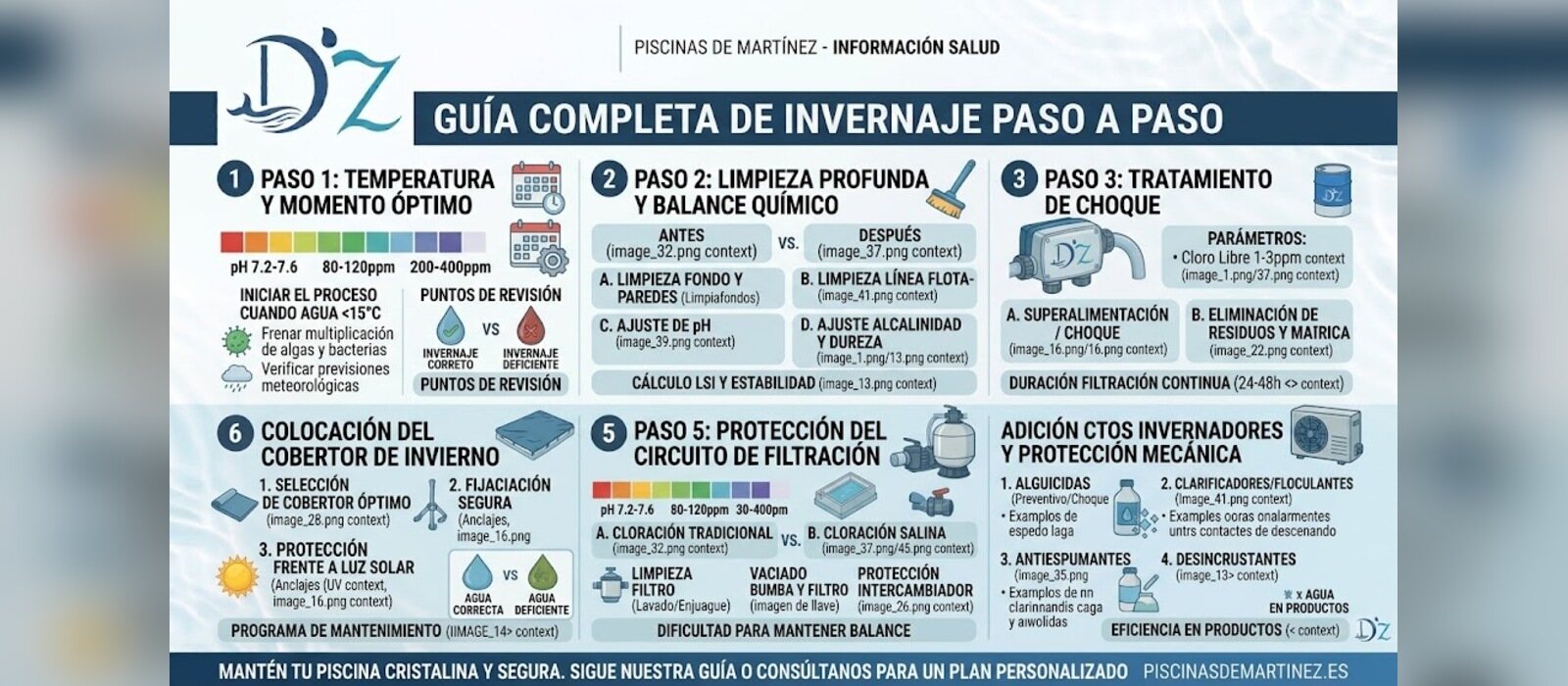
What to do with the water at the end of the season: steps, common mistakes and why you shouldn't just leave it "as is."
Read guide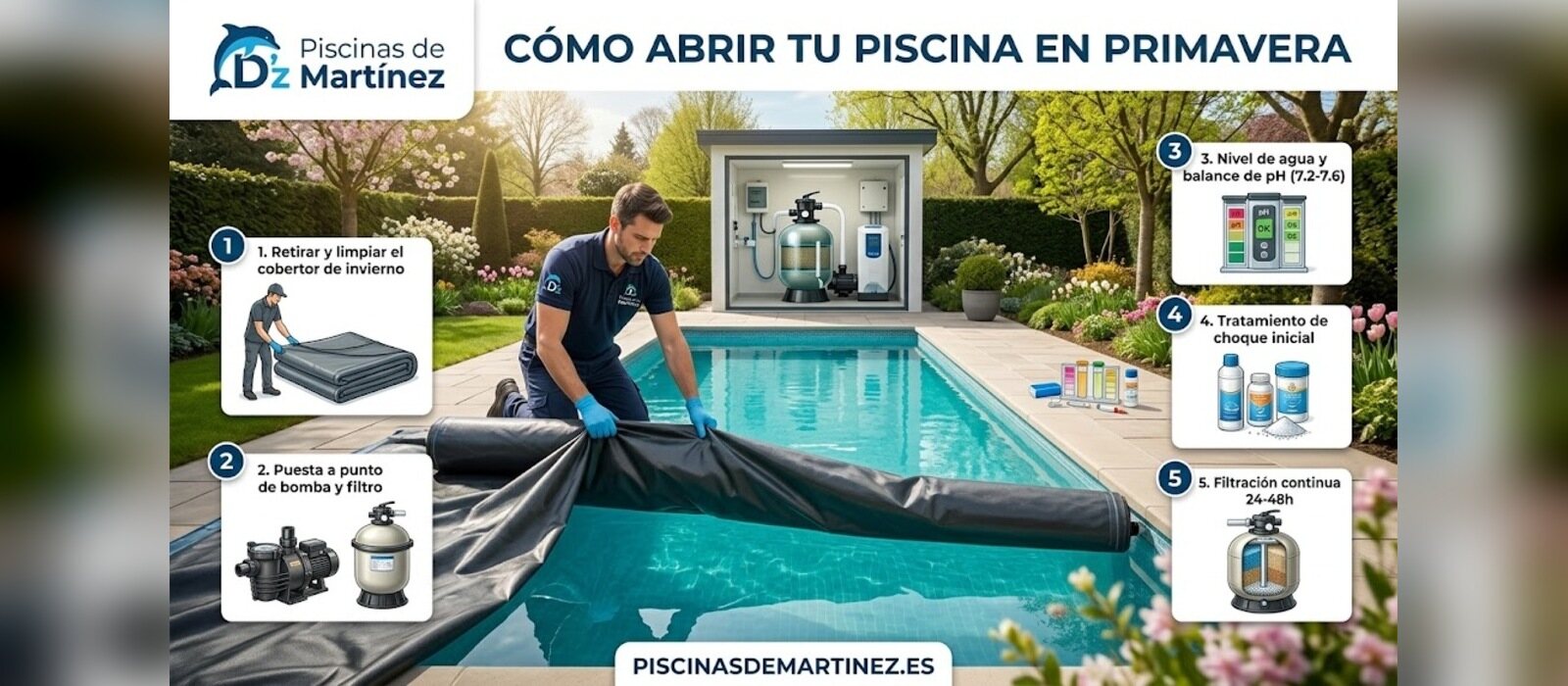
The reverse of the season closing process: cover, water level, pump and filter, and rebalancing the water before the first swim.
Read guideRD 742/2013, the CTE and regional regulations, what's required for private and community pools.
Read guideAn honest comparison of cost, maintenance and convenience between traditional chlorine and salt chlorination.
Read guide
Variable-speed pump, thermal cover and heat pump, where to start if you can only do one thing.
Read guideWhat home and community insurance typically cover in the event of an accident, and what actually reduces the risk.
Read guideAlgae's favorite food source, and almost always invisible on a basic test kit.
Read guideWhy pH drifts up on its own with still water, and what aeration has to do with it.
Read guide
They break down oils and grease that chlorine alone doesn't handle well.
Read guide
Signs that actually matter and signs that don't, before making a rushed call.
Read guide
That dark ring right at the water line has a specific cause and a fix.
Read guide
Brown, green or blackish, which color points to which metal, and how to remove it safely.
Read guide
It isn't always algae, it can be a dissolved metal oxidizing all at once.
Read guide
Sweat, urine, rain and garden fertilizer feed algae too.
Read guideBromine, UV, ozone and active oxygen, what each one can and can't do.
Read guideIt's almost always a last resort, but sometimes it really is the right call.
Read guideConcrete and gunite are naturally porous and need a finish of their own.
Read guidePrecipitated calcium carbonate, almost always caused by high pH combined with hard water.
Read guideSend us your question directly, we reply within 24 business hours.