
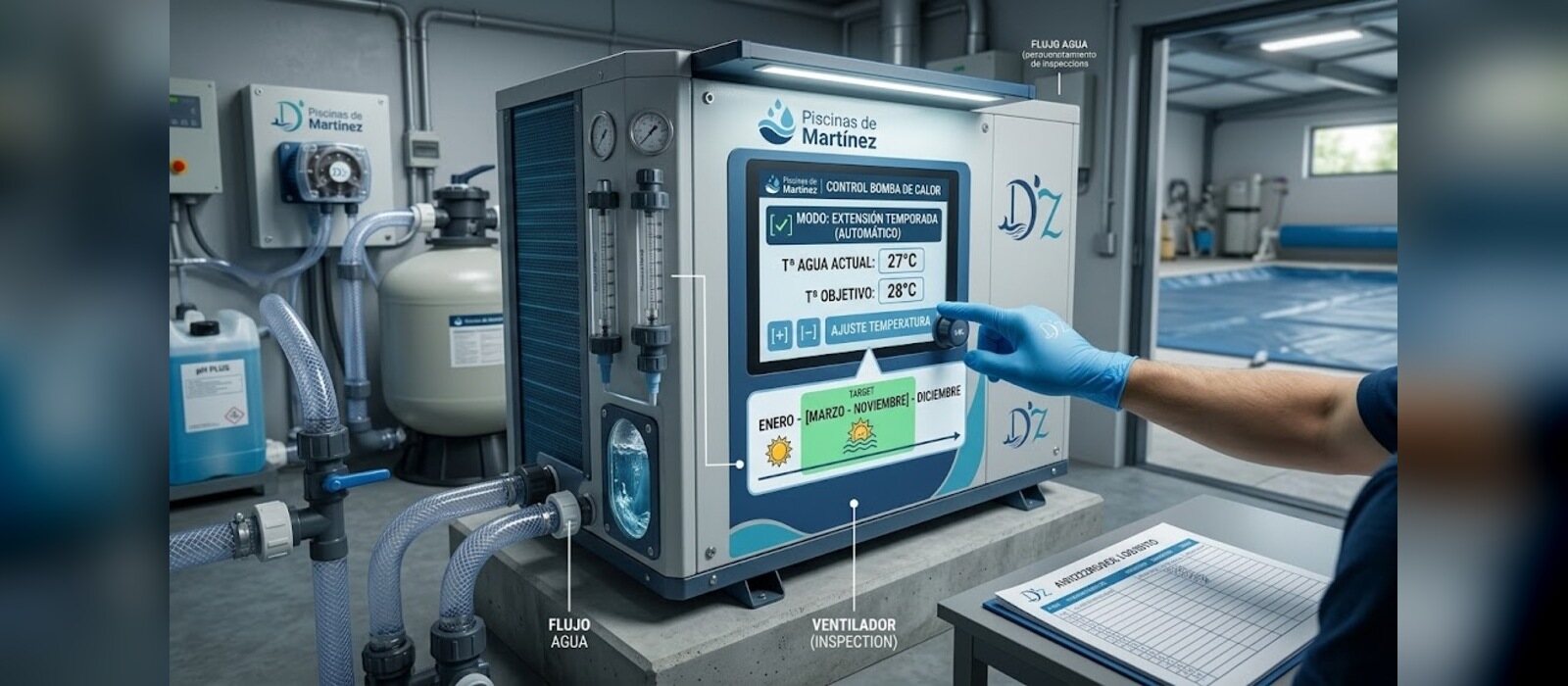
A heat pump doesn't work like an electric heater that raises the temperature all at once. It draws energy from the outside air and transfers it to the water through a reverse refrigeration cycle, the same principle as an air conditioner, but working backwards. That difference is what makes it so much more efficient.
The refrigeration cycle, at a glance
The evaporator captures heat from the outside air, the compressor concentrates it at a high temperature, the condenser transfers it to the pool water, and the expansion valve cools the gas so it can start again, all in a continuous cycle while the unit is running.
How much it really raises the temperature
As a realistic benchmark: between 0.5°C and 2°C a day, depending on the unit's power, your pool's volume and the outside temperature. It's not magic and it's not instant, it's continuous temperature maintenance, not a one-off heating boost.
Why it's so efficient
For every kWh of electricity it consumes, a heat pump can generate between 4 and 6 kWh of heat, that ratio is called the COP (coefficient of performance). The warmer the outside air, the better it performs: on warmer days the COP can reach 6-7, while on cold days it drops to 3-4. Even so, it's still far more efficient than a conventional electric heater, which at best generates 1 kWh of heat for every kWh it consumes.
What factors determine the power you need
- Pool volume, the main factor, measured in m³.
- Typical outside temperature in your area, the colder it is, the more power you need.
- Difference between the current and desired temperature, going from 15°C to 24°C isn't the same as going from 22°C to 26°C.
- Whether the pool is covered or outdoors, a cover greatly reduces power requirements.
- How many months you want to use it, heating only in spring-autumn requires less than keeping it running year-round.
A common mistake when choosing one
Installing a lower-power unit than needed is the most frequent mistake. An undersized unit runs constantly at its limit, consumes more than expected, wears out sooner, and in many cases doesn't even reach the desired temperature, the false economy of buying a smaller unit ends up costing more in the medium term.