
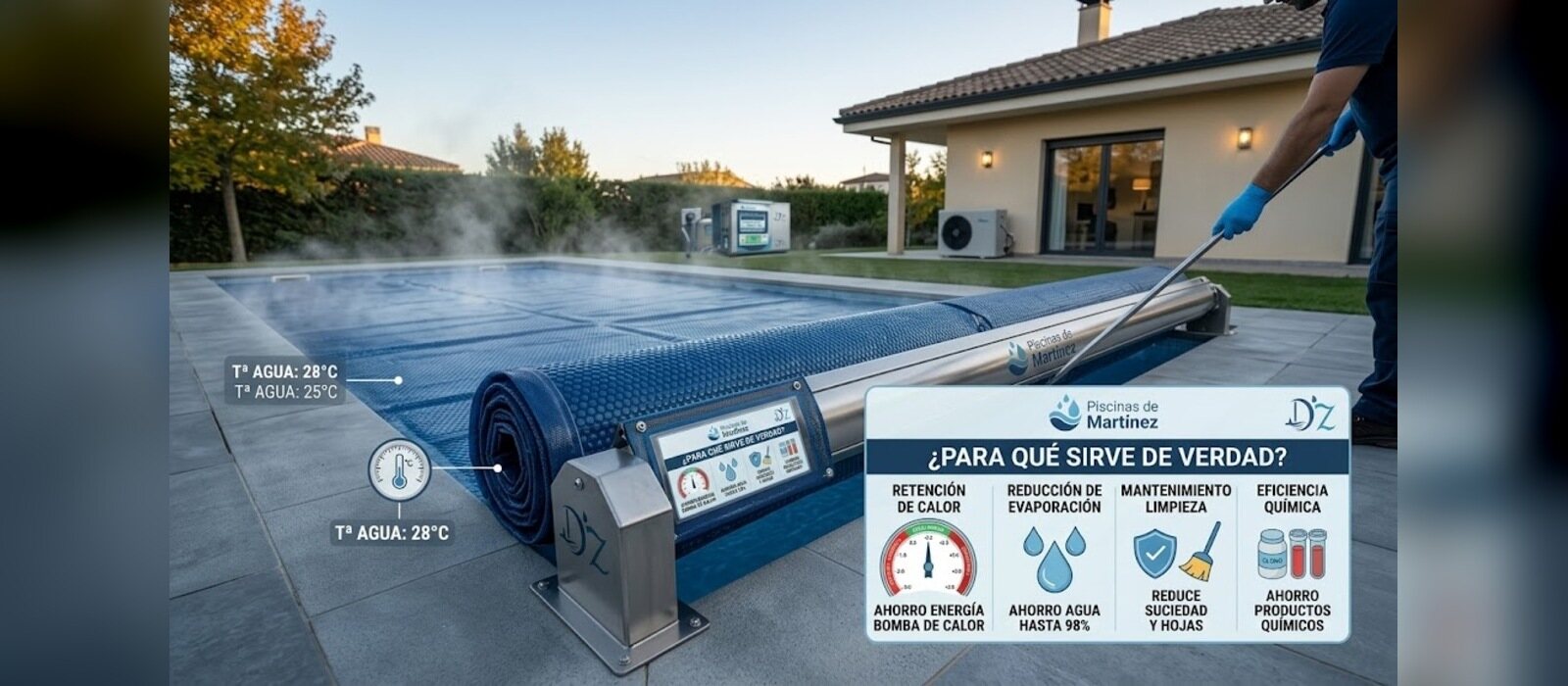
A thermal cover is an air-bubble cover that sits on the surface of the water. The name suggests that its only function is to raise the temperature, and it does, but that is by no means its only real benefit.
Evaporation, with and without a cover
It reduces evaporation far more than you might think
Properly fitted, a thermal cover can reduce water evaporation by as much as 95-98%. This isn't just about saving water: every litre that evaporates takes chlorine, stabiliser and other dissolved products with it, so less evaporation directly means fewer chemicals to replace.
Uncovered pool
With a thermal cover
Other lesser-known benefits
- Energy savings: in heated pools, it cuts the energy needed to maintain the temperature by up to 50-60%, by minimising heat loss overnight.
- Less dirt: it acts as a physical barrier against leaves, pollen and insects, reducing the load of organic matter that has to be filtered and treated.
- Extends the swimming season: it can raise the water temperature by several degrees, letting you start earlier in spring and keep swimming for weeks longer in autumn.
How to fit it correctly
Always with the bubbles facing down, in direct contact with the water, and the smooth side facing up, it is that layer of trapped air that insulates and reduces both heat loss and evaporation. It is best to cover the whole surface without leaving gaps, because any uncovered area lets a good part of the benefit escape. Ideally, keep the pool covered whenever it isn't in use, not just at night.
Is it compulsory in community pools?
No, but it is increasingly recommended, precisely because of the water it saves, something that fits with the change we covered in Decreto 99/2024, which no longer requires the pool basin to be emptied every year, in the interest of saving water.