Salt chlorination: soft water all summer, without the usual chlorine
We explain how a salt chlorinator works, what real advantages it has over traditional chlorine, and how we install and maintain it in your pool, in the south of the Comunidad de Madrid.
Escucha esta guíaIdeal si tienes las manos ocupadas junto a la piscina
More and more private owners and residential communities are switching from traditional chlorine to a salt chlorinator. It's not a fad: it's a more convenient system, gentler on the skin and, when correctly sized, more cost-effective in the medium term.
What is salt chlorination and how does it work?
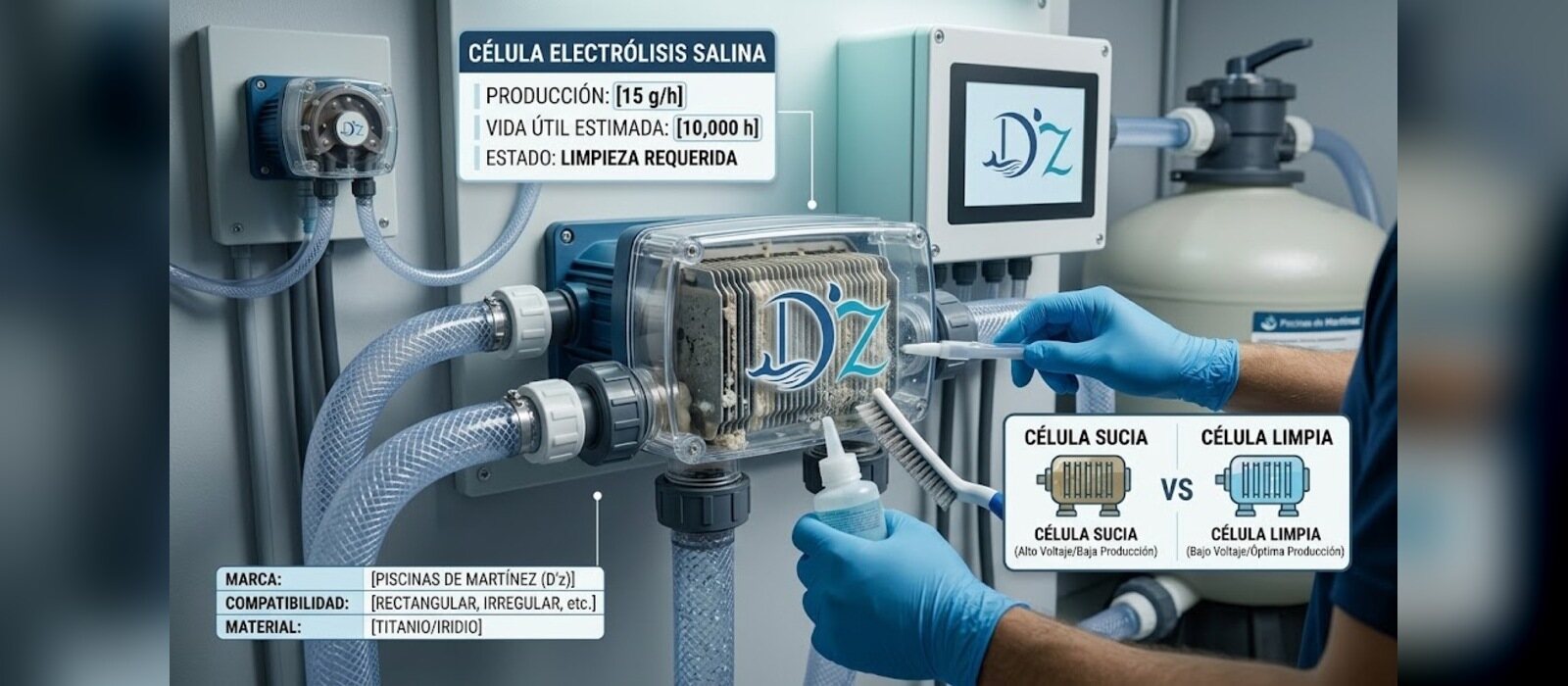
A salt chlorinator is a device installed in the pool's filtration circuit. You add a specific amount of ordinary salt (sodium chloride) to the water and, through an electrolysis process inside a cell, the device itself converts that salt into chlorine automatically and continuously, every time the water passes through the filter.
In other words: your pool is still disinfected with chlorine, but you don't buy it in bottles or dose it by hand. The system generates it on its own, in just the right amount, as the water circulates.
The pool doesn't turn into "seawater": the usual salt concentration in a domestic pool (roughly 3 to 6 g/l, depending on the equipment) is far lower than seawater's and is barely noticeable when you swim.
Salt water passes through the cell, where electrolysis turns it into chlorine, and that chlorine returns to the pool to disinfect it, in a continuous cycle as it filters.
Advantages of salt chlorination
Softer water
Less irritation to skin, eyes and mucous membranes, and hair doesn't feel as dried out after swimming.
No chlorine smell
Because chlorine isn't handled or accumulated at the surface, that characteristic traditional-pool smell disappears.
Automatic dosing
The equipment generates chlorine continuously as it filters, with no need to remember to add tablets.
Less chemical handling
You reduce direct contact with concentrated products, something especially valued in homes with children.
More stable water
Since it doesn't rely on manual dosing, you avoid the chlorine spikes and dips that favour algae growth.
Ideal for sensitive skin
Many families with young children or people with atopic skin notice the difference from the very first swim.
Traditional chlorination vs. salt chlorination
Traditional chlorine
Salt chlorination
Dosing
Manual, you have to remember
Automatic and constant
Smell and feel of the water
Characteristic chlorine smell
Soft water, almost no smell
Product handling
Direct contact with tablets or liquid
Minimal, only when adding salt
Initial cost
Low
Equipment installation
Maintenance cost
Ongoing chlorine purchases
Only salt and cell checks
Equipment maintenance
None
Annual cleaning/check of the cell
Indicative comparison. The actual cost depends on your pool's volume, the equipment chosen and how you use it; we'll go over the details at the assessment visit.
We install and maintain your salt chlorinator
At Piscinas D'Martinez we take care of the whole process: we study your pool's volume and how you use it, recommend the right equipment (including models with integrated pH control for even greater automation), install it in your filtration panel and leave it configured and running. We work with several leading brands so we can always offer you the equipment that best suits your pool and your budget, and from there we include periodic cell checks as part of your maintenance contract.
We also convert pools that currently run on traditional chlorine: in most cases no building work is needed, just installing the equipment in the existing circuit.
Want to switch your pool to salt chlorination?
We'll tell you what equipment you need for your pool and give you a no-obligation quote.
Frequently asked questions about salt chlorination
Yes, in the vast majority of cases. You just need to install the equipment in the existing filtration circuit; it usually doesn't require building work or draining the pool.
Yes, as long as the chlorinator is correctly sized and the pH is kept within range. We check this on the visit before recommending equipment to you.
It depends on the equipment, but it's usually around 3-6 g of salt per litre of water. We give you the exact amount for your chlorinator when we install it.
Yes. Salt chlorination handles the chlorine side of things, but the pH still needs to be monitored (or an automatic regulator installed). We include this in our maintenance visits.
Usually once a season, although it depends on use and water hardness. We include this as part of the equipment's annual check-up.
We use our own and third-party cookies for the website to function, to measure audience and to improve your experience. You can accept them all, reject non-essential ones, or set your preferences. More information in our Cookie Policy.
Cookie settings
Choose which types of cookies you accept. You can change this setting at any time from the "Cookies" link in the footer.
Necessary
Essential for the website to function properly (menu, form, security). They cannot be disabled.
Analytics
They help us understand how the website is used (most visited pages, time spent) so we can improve it.
Marketing
Used to show you relevant information on WhatsApp or social media after visiting the website.