
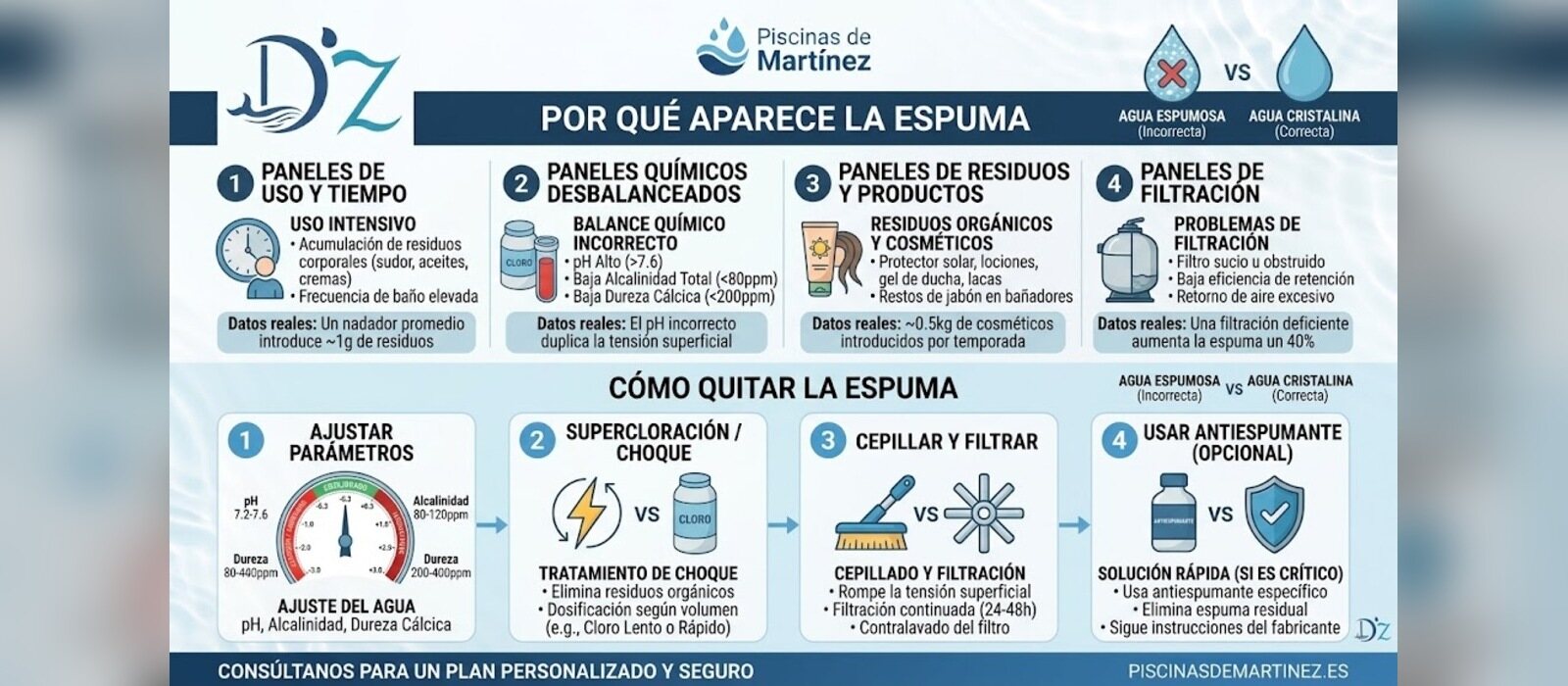
Foam in a pool almost always has a very unglamorous origin: soaps, sunscreen, cosmetics or a low-quality algaecide. It's not a fault in the chlorination system, it's a sign that there are organic compounds in the water that are using up chlorine without anyone noticing.
Why foam appears
Why it appears
The most common cause is surfactants: the substances that make soaps, shower gels, tanning creams and some cosmetics foam up. When they enter the pool water, usually because someone swims without showering first, the movement of the water (swimming, the return jet, the pool cleaner itself) stirs them up and generates foam, exactly the way it happens in a washing machine.
Another common, lesser-known cause: some budget algaecides contain surfactants in their own formula. If you notice foam right after treating the water against algae, the product itself may be the source.
How to remove it
- Quick fix: an anti-foam product specifically for pools (silicone- or mineral-oil-based), which breaks down the existing foam within minutes.
- Real fix: reduce the source. Encourage swimmers to shower before getting in, and if you use algaecide, choose one without surfactants.
Anti-foam product is a useful patch for the moment, but it doesn't remove the organic matter that caused the foam, if the source isn't addressed, it comes back at the next bathing session.
When it's a sign of something more
If the foam is persistent and doesn't go away over time or with anti-foam product, it can point to an underlying problem: very high alkalinity or water that's too soft (low calcium hardness). In that case, the problem isn't just cosmetic, it's worth reviewing the overall water balance, not just treating the foam.