
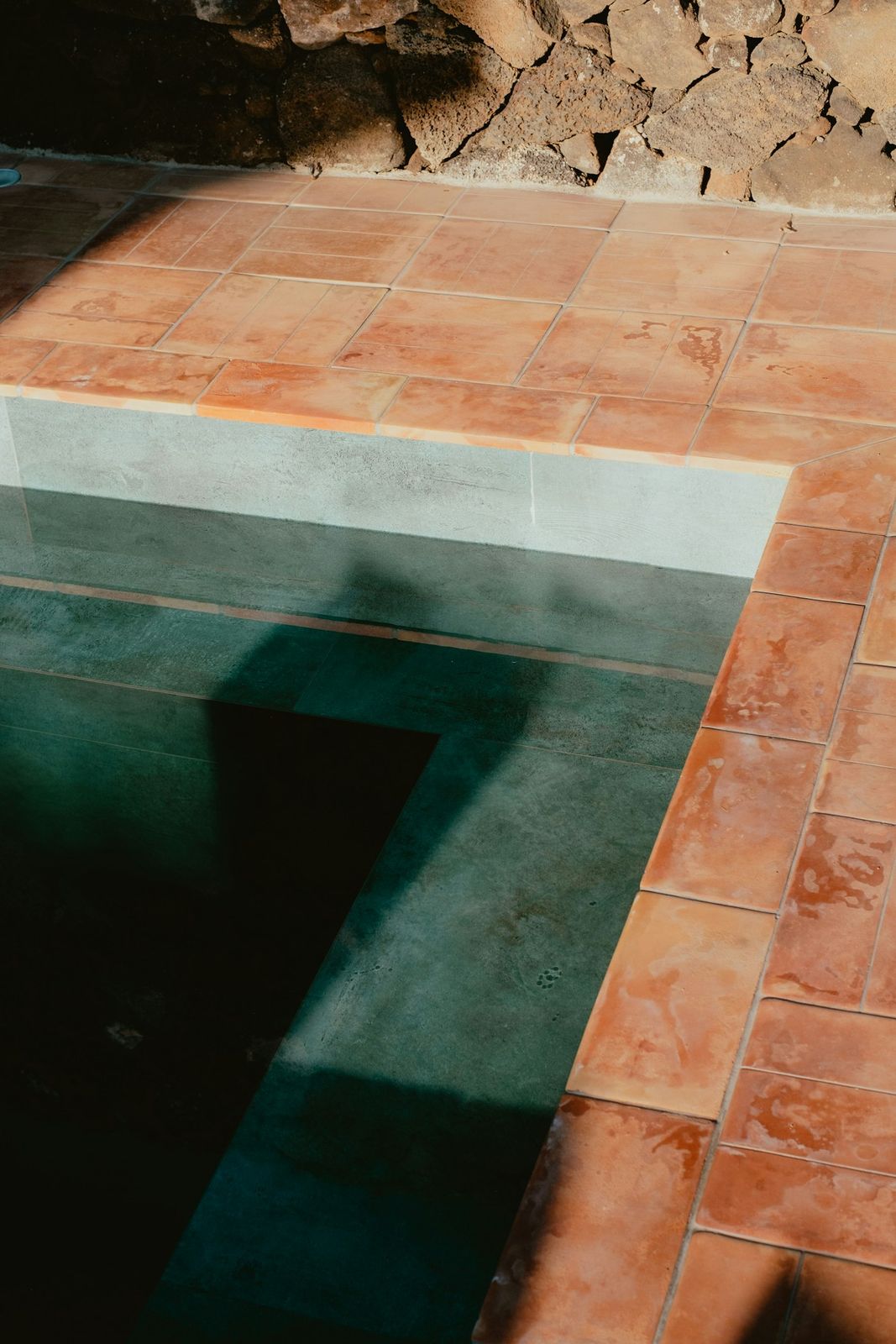
When a stain appears on the wall or floor of the pool, the temptation is to scrub it with whatever you have to hand. The problem is that there are at least two completely different types of stain, with opposite causes and treatments, using the wrong product may do nothing at all, or actually make things worse.
Metal or scale? Each stain, its treatment
Reddish, greenish or blackish
- Cause: dissolved iron, copper or manganese
- Ordinary chlorine doesn't remove them, it darkens them further
- They need a specific metal sequestrant
Whitish, rough to the touch
- Cause: excess lime (scale-forming water, high LSI)
- Treated with a specific acid product
- Light stains: even diluted vinegar helps
Metal stains
They are caused by metals dissolved in the water, iron, copper or manganese, which usually come from the top-up water, from a worn salt chlorinator cell, or from metal fittings in contact with the water. You can recognise them by their colour: reddish or brown (iron), greenish or bluish (copper), or blackish (manganese).
Treatment with ordinary chlorine doesn't remove them, in fact, it can oxidise the metal further and darken the stain. You need a specific metal sequestrant product, which "traps" the dissolved metal and stops it from staining any further.
Limescale stains
These are whitish deposits, rough to the touch, caused by excess lime in the water, the same phenomenon that furs up a coffee maker. They usually coincide with "scale-forming" water (high LSI), the same tendency you can check with our Langelier Index calculator.
They are treated with a pool-specific acid product, which dissolves the deposited calcium carbonate. For light stains, even diluted vinegar can help as a one-off treatment, although thicker scale deposits need a more concentrated product.
Why they suddenly appear
It almost always coincides with some change: top-up water from a different well or tank than usual, a change of treatment product, or parameters that had been out of balance for some time, high calcium hardness, uncontrolled pH, without anyone noticing until the stain became visible.