
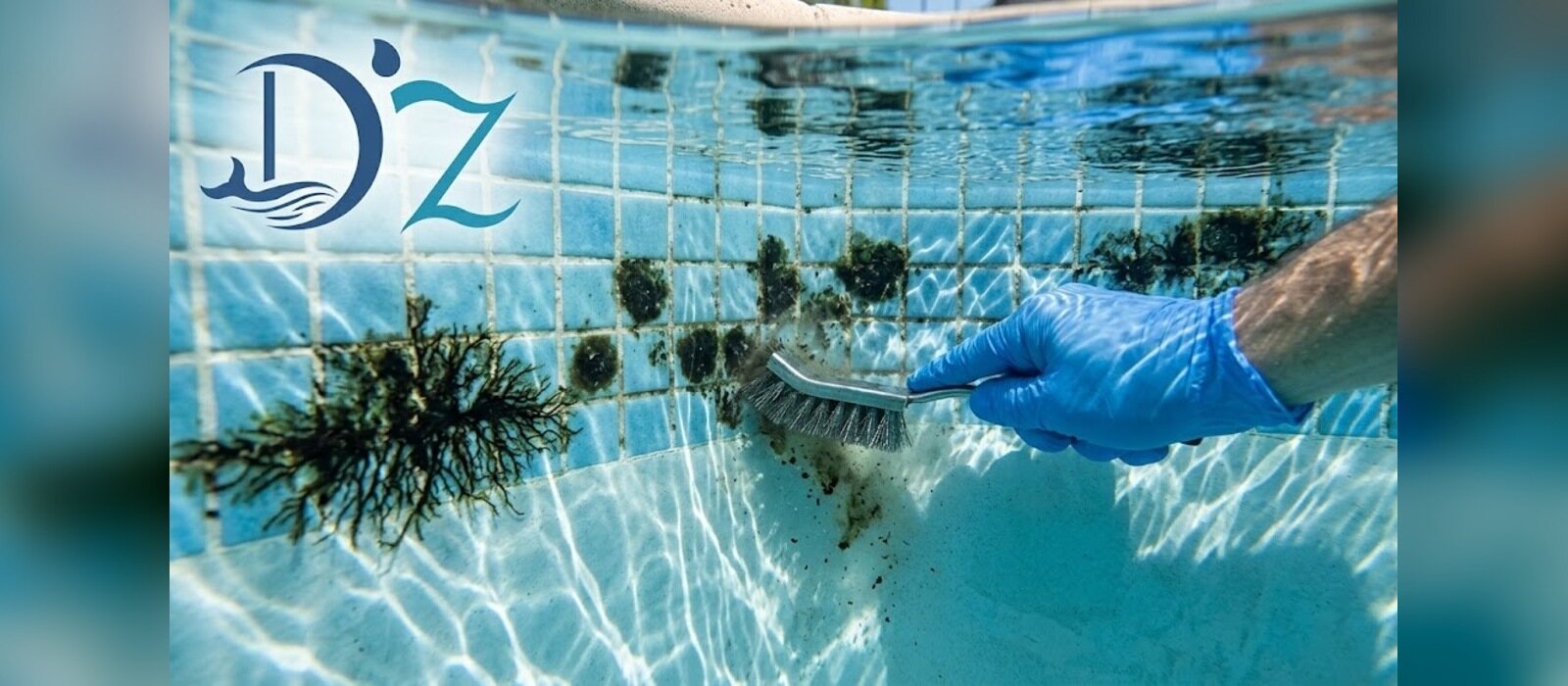
Despite the name, black algae isn't technically algae, it's cyanobacteria, a type of bacteria related to algae that behaves very differently from the more common green or yellow algae. And that difference is exactly what makes it so hard to remove.
Why you have to brush, not just chlorinate
Why it's different from the rest
Black algae develops a protective layer over itself, highly resistant to ordinary chlorine, and anchors deep roots into the surface it settles on. It's common in tiled (gresite) pools, because the grout lines between tile pieces provide small gaps where these roots can anchor easily, something that doesn't happen the same way on a smooth, continuous surface.
Because of this, a standard shock treatment, the same one that fixes green water caused by ordinary algae, is often not enough here: the chlorine acts on the surface of the colony, but the protective layer and the deep roots stay intact, and the stain reappears within days.
What it actually takes
- Intense mechanical brushing, with a specific brush (stainless steel on surfaces that can take it) directly on each stain, to physically break down that protective layer before chlorine can act on it.
- Repeated shock treatment, not just one, you typically need several rounds combined with brushing until the colony stops reappearing.
- A specific black-algae algaecide, different from the generic maintenance algaecide, applied after brushing to reinforce the treatment.
How to stop it coming back
Once removed, keeping chlorine and pH consistently within range, without occasional dips, is the best prevention. Black algae rarely appears in a pool with regular monitoring; it almost always shows up after a period without proper care, for example when reopening after winter.