
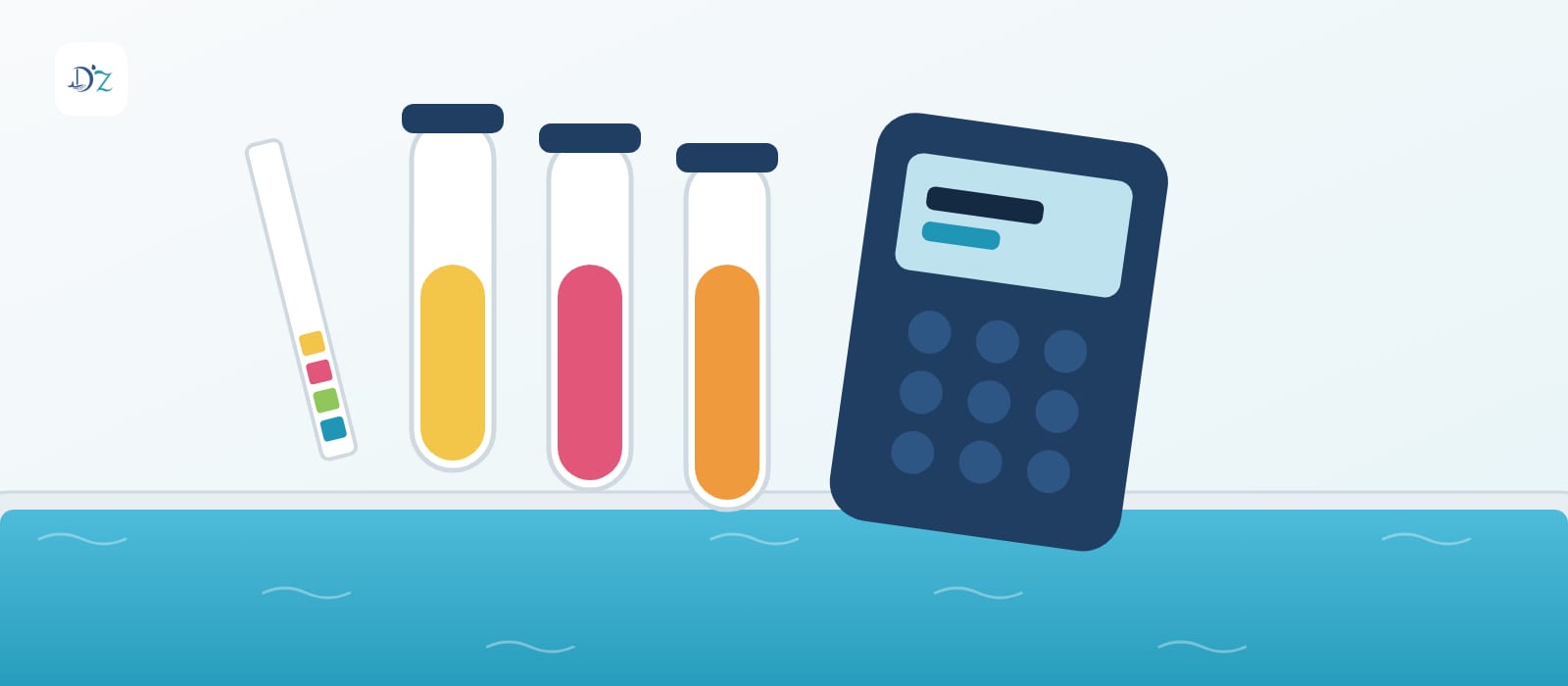
To look after the water you only need two reliable readings: free chlorine (0.5-2.0 ppm) and pH (recommended 7.2-7.6). There are three ways to measure them, from least to most precise: test strips, drop kits and photometers. All of them work if used properly.
A good reading, step by step
The three methods compared
| Test strips | Drop kit | Photometer | |
|---|---|---|---|
| How it works | Dip the strip and compare the colours with the chart on the tub. | Fill a tube, add drops or tablets and compare the colour. | A device reads the colour of the sample and gives you the number. |
| Precision | Approximate. | Good, if read in good light. | The highest. |
| Advantage | Quick and cheap. | Affordable and reliable. | No colour reading; also measures total chlorine. |
| Best for | Quick checks at home. | Most private pools. | Communities and professional control. |
Free, total and combined chlorine
The reagent to use is DPD, because it separates free chlorine (the one that disinfects) from total chlorine. DPD 1 tablets measure free chlorine; DPD 3, total chlorine. The difference is combined chlorine, which should not exceed 0.6 ppm. Old orthotolidine (OTO) kits only give a total chlorine reading and can't tell you how much is actually disinfecting.
pH is measured with phenol red, as strips, drops or tablets.
How to take a proper sample
- Away from the return inlets and skimmers, where the water has just received product or has just been filtered.
- At about 30-40 cm deep: push the tube in upside down up to your elbow, turn it over and bring it out full. Surface water isn't representative.
- Before adding products, or at least a few hours afterwards with the filtration running.
- Read the colour straight away, in daylight against a white background, within the time the manufacturer states.
Mistakes that give false readings
- Out-of-date reagents or strips from a tub left open in the sun or damp.
- Tubes not rinsed between tests.
- Touching the reading pad of the strip with your fingers.
- Testing right next to the inlet where chlorine or pH reducer is going in.
How often to test?
For a private pool in swimming season, two or three times a week, and daily in heatwaves or with heavy use. In community pools of more than 30 homes, Decreto 99/2024 requires routine checks at least twice a day, and the owner must have the analysis methods used in writing (art. 17). We cover it in the guide to the pool log book.
Frequently asked questions
Are test strips any good?
Yes, for quick checks. They're less precise than drops or a photometer, so if something doesn't add up or you're about to make a big correction, confirm with a more reliable method.
Why does my kit show chlorine when the water is green?
You may be measuring total chlorine instead of free chlorine, or the pH may be so high that chlorine barely works. Test free chlorine with DPD and check the pH.
How often should reagents be replaced?
Check the expiry date and keep them closed, somewhere cool and out of the sun. An expired reagent gives readings you can't trust.