
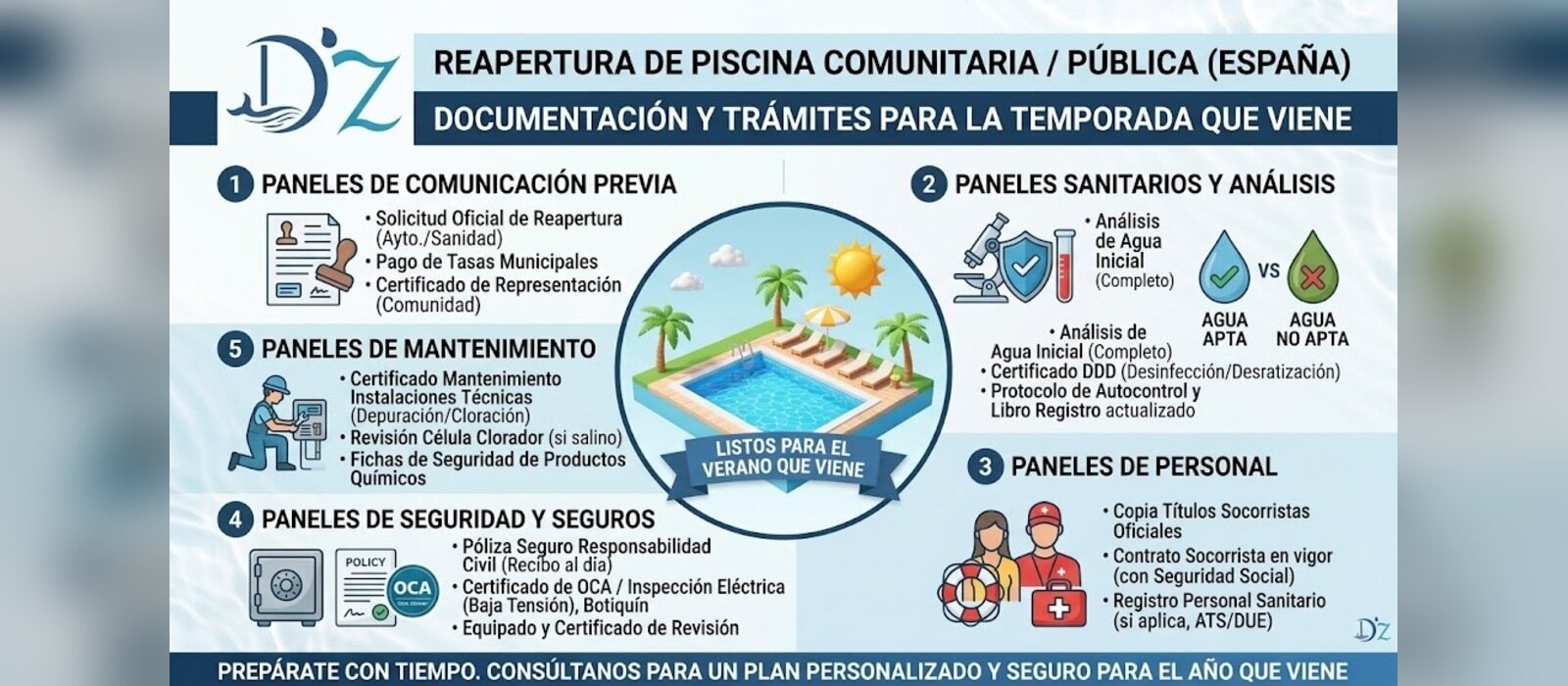
A pool accident, a fall, a knock, or something worse, raises an uncomfortable question that many owners and communities don't ask themselves until it's too late: who's liable, and is it covered? Here's the essentials, for both private and community pools.
What the insurance should cover
Coverage exists if it's properly declared, the most common mistake is not telling your insurer about the pool.
Private pools: do I need specific insurance?
There's no specific mandatory insurance for private pools in Spain. In practice, a standard home insurance policy usually covers the pool as long as it's declared in the policy, it's important to tell your insurer if you build a pool after taking out the insurance, to avoid ending up without cover because it wasn't reported.
A home policy usually includes:
- Liability for accidents to third parties: falls, injuries or incidents suffered by anyone outside your household while using the pool, including the more serious ones.
- Material damage to the installation: pipe bursts or leaks affecting the shell or the filtration circuit.
- Electrical damage to the pump, filter and the rest of the equipment connected to the pool's electrical supply.
Community pools: liability falls on the community
There's also no legal obligation to take out specific liability insurance for a community pool. But that doesn't exempt the residents' association from liability if an accident happens: any incident, whether personal injury or material damage, can end up making the community liable, with or without insurance in place.
That's why, in practice, the vast majority of communities include liability cover within their community insurance, which usually covers:
- Liability for damage to third parties at the pool.
- Legal defence against a possible claim or lawsuit.
- Cover for maintenance or lifeguard staff hired by the community.
- Repairs for leaks and structural damage to the pool shell.
What actually reduces liability risk
Beyond what the insurance covers, there are measures that reduce the likelihood of an accident happening and, if it does, the community's or owner's exposure:
- Certified lifeguard when regulations require it based on the size and type of facility, we cover this in our lifeguard service.
- Visible signage with the rules of use, capacity, depth and recommended minimum age.
- First aid kit and accessible rescue equipment.
- Fencing and access control in line with what your municipality requires, we explain it in detail in our guide to fencing and safety regulations.
- Documented water quality control, with the lab tests and records required by regional regulations, you can see the full checklist in documentation for opening the pool.
Well-documented maintenance doesn't just prevent water problems: it's also proof that the community or owner acted with due diligence, which can be relevant if you ever have to respond to a claim.