
Hardly anyone reads the chlorine label until something goes wrong. Yet that small print is a document regulated by the European Union: it tells you what the product contains, how much, who is responsible for it and what to do if there is an accident. Here is how to read it, step by step.
The 5 things to check on the tub
1. Look for the authorisation or registration number first
Pool chlorine is a biocide (product type 2: disinfectants), so it cannot be sold without an authorisation. On the label you will see one of these formats:
- EU or national authorisation, with a number such as EU-… or a national authorisation code.
- Spanish Official Biocides Register number (Ministry of Health), for products still under the transitional regime.
If the tub has no number of this kind, be wary. You can look the product up by name or number in the Spanish Ministry of Health biocides search.
2. Active substance and concentration
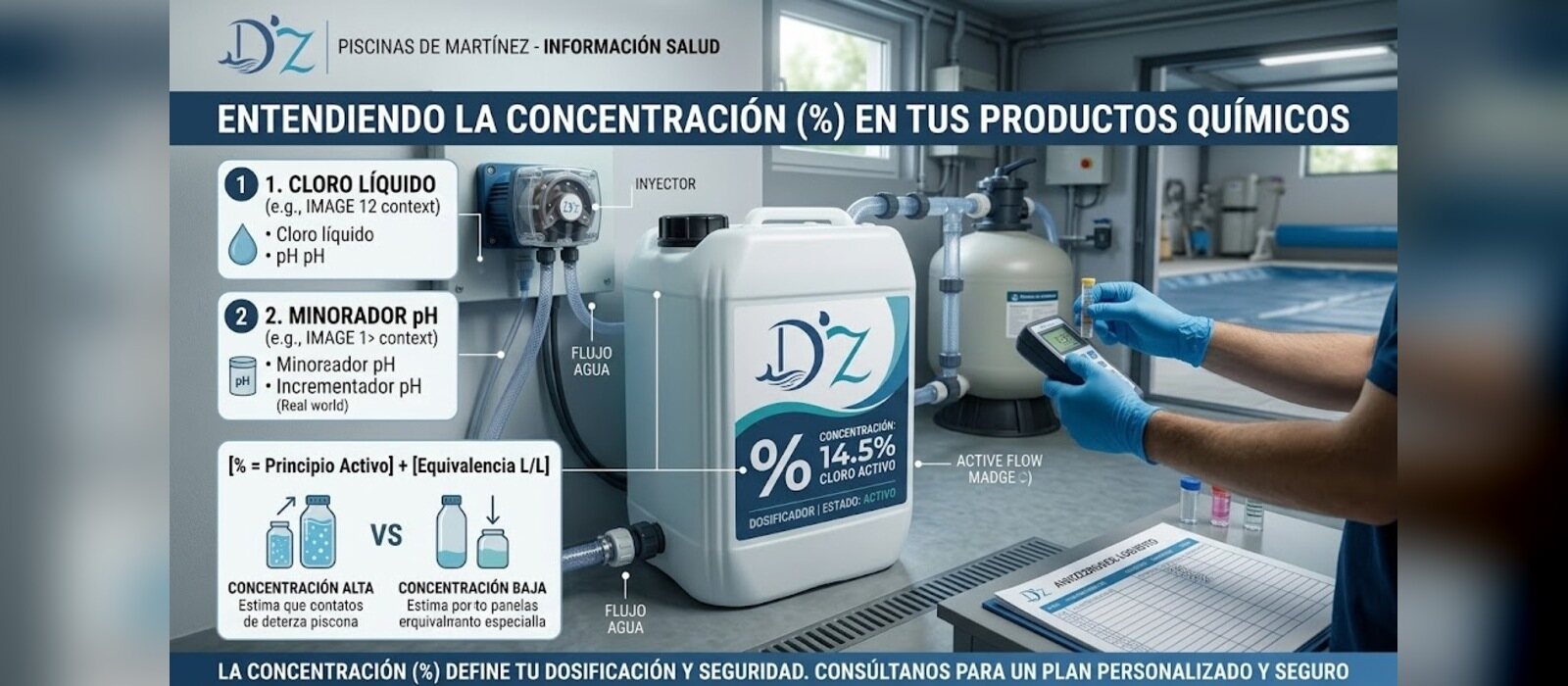
The label must state the active substance and its concentration. In pools this is usually trichloroisocyanuric acid, sodium dichloroisocyanurate, calcium hypochlorite or sodium hypochlorite. Concentration is what lets you compare tubs at different prices: see what the chlorine percentage means.
3. Who it is for: general public or professional
The authorisation sets the user category. A product marked for professional use only is not meant to be handled by a homeowner, even if it can be bought online.
4. Pictograms and H statements
The red diamonds and H statements come from the EU classification and labelling regulation (CLP). They depend on each product. Common ones on pool chlorine:
- H272: may intensify fire; oxidiser. Keep away from combustible materials.
- H302: harmful if swallowed.
- H319 (eye irritation) or H314 (severe skin burns and eye damage), depending on the product.
- H400/H410: very toxic to aquatic life.
- EUH031: contact with acids liberates toxic gas. This is why chlorine is never mixed with pH reducer.
Practical tip: if the label shows EUH031, store that chlorine away from acid or pH reducer. More in how to store pool chemicals safely.
5. Dose, authorised uses, batch and expiry
The Biocidal Products Regulation requires the label to show the authorised uses, instructions and dose, possible adverse effects and first aid, the authorisation holder, the batch and the expiry date. Keep the tub until it is finished: if there is a problem, the batch is what makes it traceable.
What the label is not allowed to say
The same regulation bans a biocide from being described as “non-toxic”, “harmless” or similar. If you see those words on chlorine, it is not a good sign.
Frequently asked questions
How do I know if a pool chlorine is authorised?
Look for the authorisation number (EU or national) or the Official Biocides Register number on the label and check it in the Spanish Ministry of Health biocides search.
What does EUH031 mean on a chlorine tub?
That contact with acids liberates toxic gas. This is why chlorine is never mixed with pH reducer and the two are stored apart.
Can a chlorine product claim to be harmless?
No. Regulation (EU) 528/2012 bans labelling a biocide as non-toxic, harmless or with similar indications.