
Let's get straight to it: those white flakes are almost always calcium carbonate that has precipitated out and is no longer dissolved in the water. It isn't dirt, it isn't a sign the cell is broken, and it isn't dangerous to swim in. It's simply water chemistry: under certain conditions, the calcium that's normally dissolved stops "fitting" in the water and solidifies into small white particles.
Calcium precipitating in the cell
Why calcium precipitates
Water can hold a certain amount of calcium in solution, but that capacity depends directly on pH. The higher the pH climbs, the less calcium can stay dissolved, and the excess solidifies as calcium carbonate, the flakes or white dust you see floating or settled on the floor. Two ingredients are needed for this to happen:
- A high pH, whether from a sudden spike (for example after adding a pH corrector too abruptly or in excess) or a sustained upward drift over time.
- Already-high calcium hardness, meaning "hard" water with a lot of dissolved calcium. With low hardness, the same high pH rarely causes visible precipitation.
Why it happens more in salt pools
Here's the key that explains why this problem is so characteristic of salt chlorination. The chlorinator cell generates chlorine by electrolyzing the salt dissolved in the water, and that electrochemical process raises pH locally, right at the surface of the cell's plates, a very small zone, but one where the pH can be considerably higher than the rest of the pool for an instant. If the water already has high calcium hardness, that microzone of elevated pH is exactly where calcium carbonate finds it easiest to precipitate, and from there it can break loose into the rest of the water. This is a phenomenon that barely occurs in pools with traditional chlorination, precisely because there's no such point of electrochemical generation.
How to fix it
Order matters here, because treating the symptom without correcting the cause just makes the flakes come back shortly after:
- Check and correct the pH until it's back in the right range. This is the step that cuts the problem off at the root, as long as pH stays high, the water will keep "expelling" calcium.
- Check the calcium hardness. If it's well above the recommended range, consider a partial water renewal to bring it down, since there's no simple chemical way to reduce it once it's dissolved.
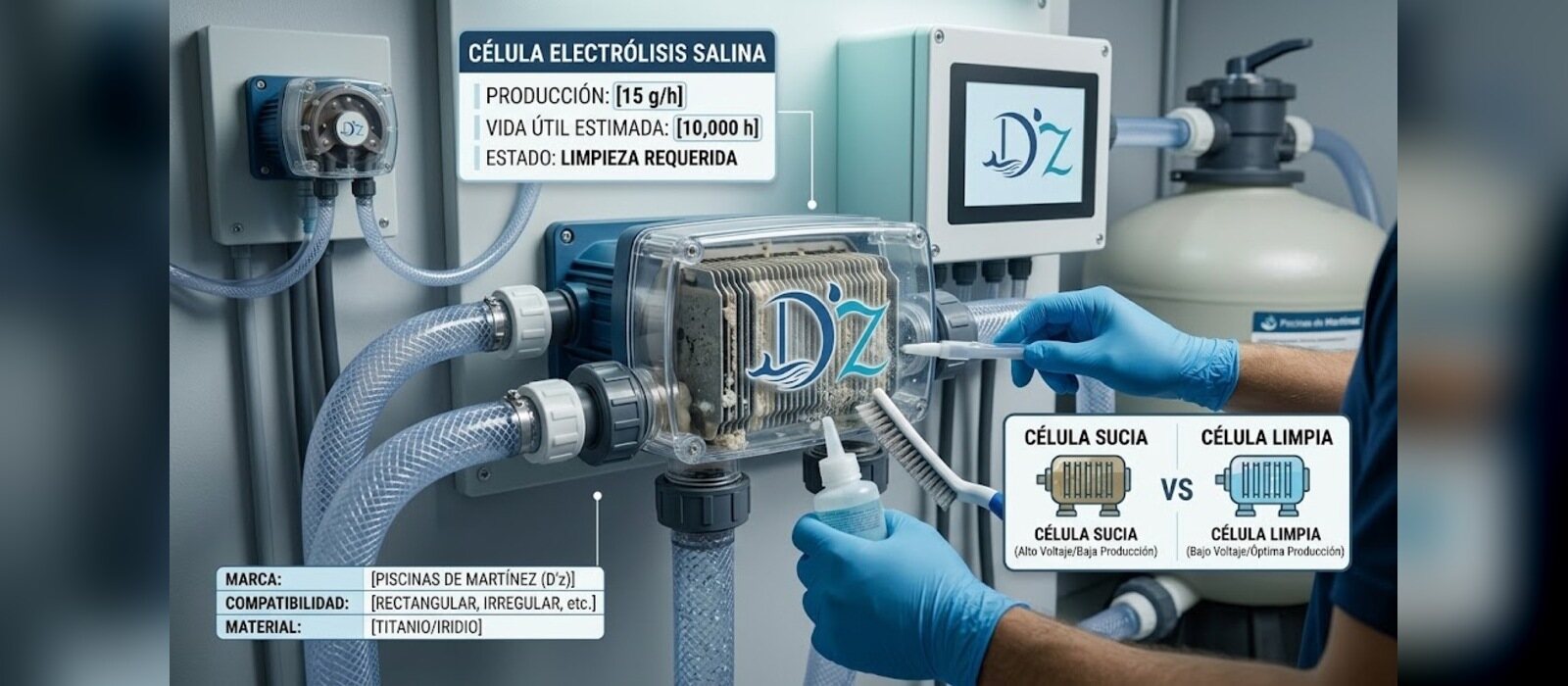
- Check the condition of the cell. A cell with built-up limescale on its plates loses efficiency and can make the local pH problem worse; periodic cleaning as recommended by the manufacturer keeps it working properly.
- Keep the filtration running while the parameters are being corrected, it helps pull the particles that have already formed out of circulation.
Frequently asked questions
Are the white flakes dangerous to swim in?
They aren't toxic, it's calcium carbonate, the same compound found as limescale in taps or coffee makers. It isn't a health risk, but if it shows up in quantity it usually means pH is out of control, and that's worth correcting as soon as possible.
Why does this happen more in salt pools than in traditional chlorine pools?
Because the salt chlorinator's cell generates a locally elevated pH right at the surface of its plates during electrolysis. If the water already has high calcium hardness, that high-pH zone is where calcium carbonate precipitates most easily.
How do I remove the white flakes that have already appeared?
First correct the pH to the right range, so it stops generating more. After that, continued filtration and a good brushing of the floor usually removes most of the particles already formed within a couple of days.