
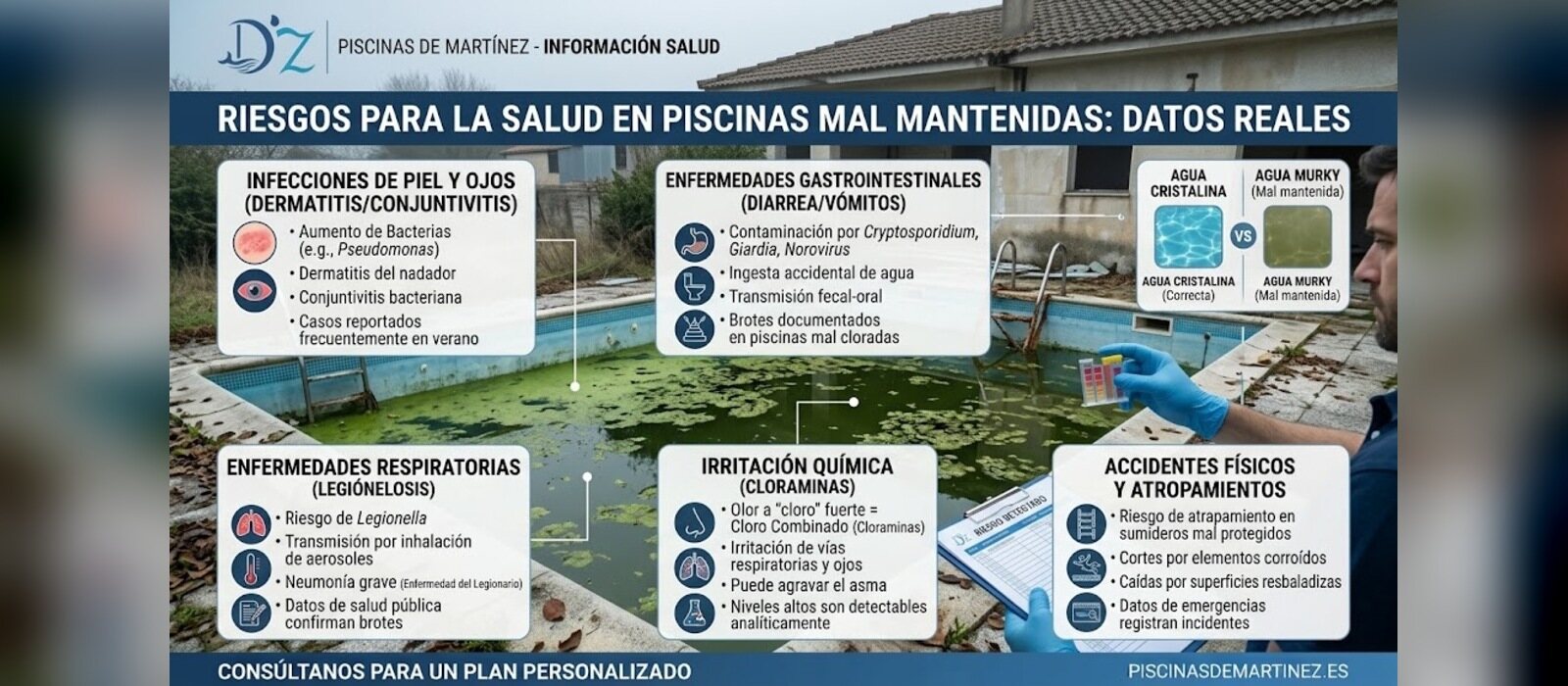
It's easy to think of pool maintenance only in terms of looks: clear water, no algae, a pleasant smell. But behind those visible symptoms lies something more important, maintenance exists, above all, to prevent real health risks for the people who swim in it.
Why properly treated water protects you
The most common risks
- Ear infections: contaminated water trapped in the ear is one of the most frequent causes of ear infections in summer, especially in children.
- Skin irritation and dryness: an unbalanced pH, too high or too low, dries out and irritates skin, even when the chlorine level is correct.
- Eye and mucous membrane irritation: almost always blamed on "too much chlorine", when it's actually usually the opposite, an excess of chloramines, that is, chlorine that has already been used up.
- Dermatitis: prolonged contact with unbalanced water can trigger or worsen skin reactions, especially on sensitive skin.
- Athlete's foot and other fungal infections: these spread easily in damp, poorly disinfected areas, such as the pool edges and adjoining showers.
- Gastrointestinal discomfort: in the more severe cases of contaminated water, digestive symptoms can appear, especially if water is swallowed while swimming.
Why it happens, almost always
The vast majority of these risks share the same underlying cause we've already seen in other guides: an unbalanced pH that stops chlorine from doing its job, or an excess of chloramines mistaken for "too much chlorine" when it's exactly the opposite. These aren't isolated failures, they're the direct consequence of maintenance that only gets attention once something already looks off, instead of being monitored constantly.
Who's most at risk
Young children, people with sensitive skin or an existing skin condition, and anyone who is immunocompromised are the groups most exposed to a water imbalance turning into an actual symptom. In community and public-use pools, that's precisely the reason behind the whole mandatory-control regulations we've already covered in other guides.
What to do if symptoms appear after swimming
The first thing is to check the pH and the free chlorine, by far the most common cause. If symptoms persist or are severe, it's sensible to see a healthcare professional, as with any other symptom, this guide covers the risks, it doesn't replace a medical diagnosis.
Frequently asked questions
If the water looks clear, is it always well maintained?
Not necessarily. Clarity depends on filtration; health risks depend on chemical and microbiological balance.
Why do my eyes come out irritated even though the water looks fine?
Almost always because of excess chloramines, not chlorine.
What's the first thing to check if symptoms appear after swimming?
The pH and the free chlorine, the most common cause of irritation and discomfort.